Category Archives: ships

The Mariner


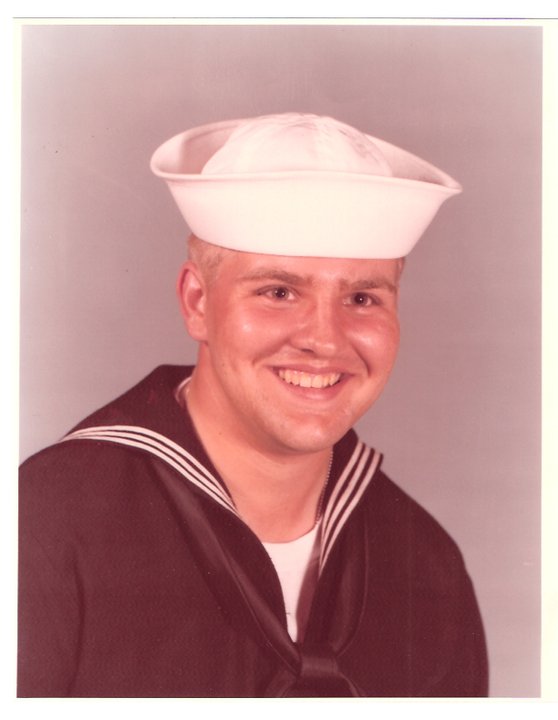
Oct. 1980, first official navy photograph.

Oct. 1980, first official navy photograph.

I wrote this years ago, at a time when if someone would have suggested that I would be a writer I would have scoffed at them. Looking back I have always been writing, but never considered myself a writer. Unfortunately, I have almost nothing of my earlier work. So here is one of the few. I also have an article about the newlywed couples on the Titanic that I will be sharing soon.

I was thinking today of my last voyage at sea. It was a night trip from Puerto Rico to St. Croix in the Virgin Islands; we left in the late afternoon. Since it was a short trip, our Captain decided to make it on the surface. I was the sonar supervisor until 6 pm. I got off watch, checked the after watch clean-up of my sonar men, reported the clean-up done to the off-going chief of the watch, and ate dinner. Afterwards, while the evening movie was playing on the mess deck (only a couple of men were watching the movie), I packed the few things I had left. My last night as a submarine sailor, a job I loved; this job, this world, this life was all I knew. I wandered the submarine; this was my last night at sea — ever.

I ended up in the control room just as they were changing the lookout up on top of the sail (conning tower). I was still a qualified lookout, though I had not stood the watch since I qualified as a sonar supervisor. I volunteered to go up. The chief of the watch passed the word to the bridge on top of the sail.

Petty officer Combs to the bridge to relieve the lookout,” said the chief.

Coming up through the hatch into the Caribbean night sky was awesome. My soul has always been at peace, at sea, surrounded by the ocean. The sonar division officer was the officer of the deck.

“Are you sure you want to give this up?” he asked scanning the horizon with his outstretched arm.

No, I did not want to give this up, but “this” did not happen often enough. A submariner’s life is spent below the surface of the ocean, in darkness. His world illuminated by red lights and the glow of electronic equipment.

The first night on a voyage is unique, though this was more than first night. First night, men not on watch go to their bunks, it has been a long hard day. The normal routines of a ship at sea are not part of that first night. Those men on watch are exhausted from the day’s work of preparing a submarine to go to sea, and then taking that submarine to sea. The usual banter between the men on watch is absent that first night. Only the whir of electronic equipment fills the air with sound.

Words are inadequate to describe being at sea with a deck under your feet. There you are alone in your thoughts, you and the sea. Your family, friends, and responsibilities back on shore still exist, but they might as well be on Pluto. You cannot affect them, even if you wanted too. Quite literally all of your problems are behind you. That great equalizer, the sea, is spread out as far as the eye can see before you. No privileges, no obstacles. You stand there on deck feeling the sway of the ocean and the vibrations of the ship. All is as it should be, all is at peace. The sea is constant and plays no favorites.

If Jesus was a carpenter … God was a mariner.

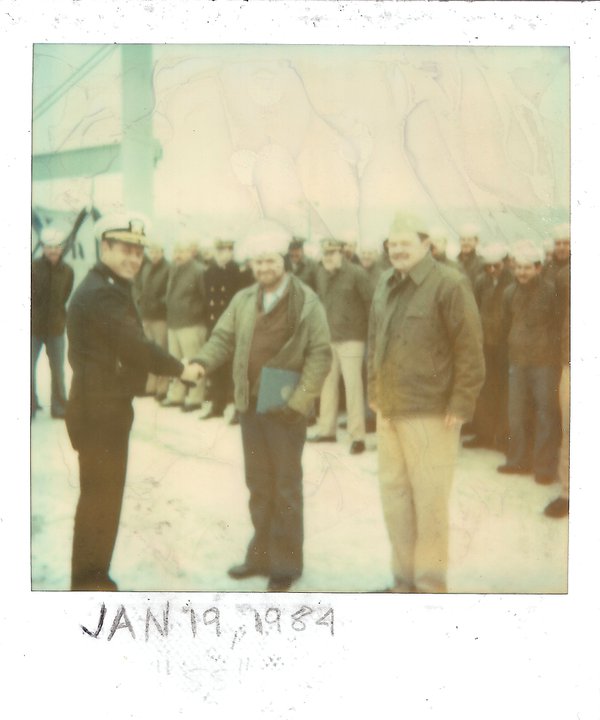
My commanding officer Commander (later Admiral) Frank "Skip" Bowman just pinned the Submarine Warfare pin on my chest. Standing behind me is my first sonar chief Lee Goodyear.

My commanding officer Commander (later Admiral) Frank “Skip” Bowman just pinned the Submarine Warfare pin on my chest. Standing behind me is my first sonar chief Lee Goodyear.

6 Comments

Filed under Cup-O-Joe, family, history, New, ships, submarines

April 10, 1963 ~ April 10, 2013


Below is a link for a short note I wrote on my personal facebook page. It is timely, and now you know a little bit more of where my thoughts are in the spring.

Thank you a great week.

Joe

https://www.facebook.com/notes/joe-combs/april-10-1963-april-10-2013/10151563444877340

2 Comments

Filed under chivalry, family, history, ships, submarines

Speaking of Small Submarines


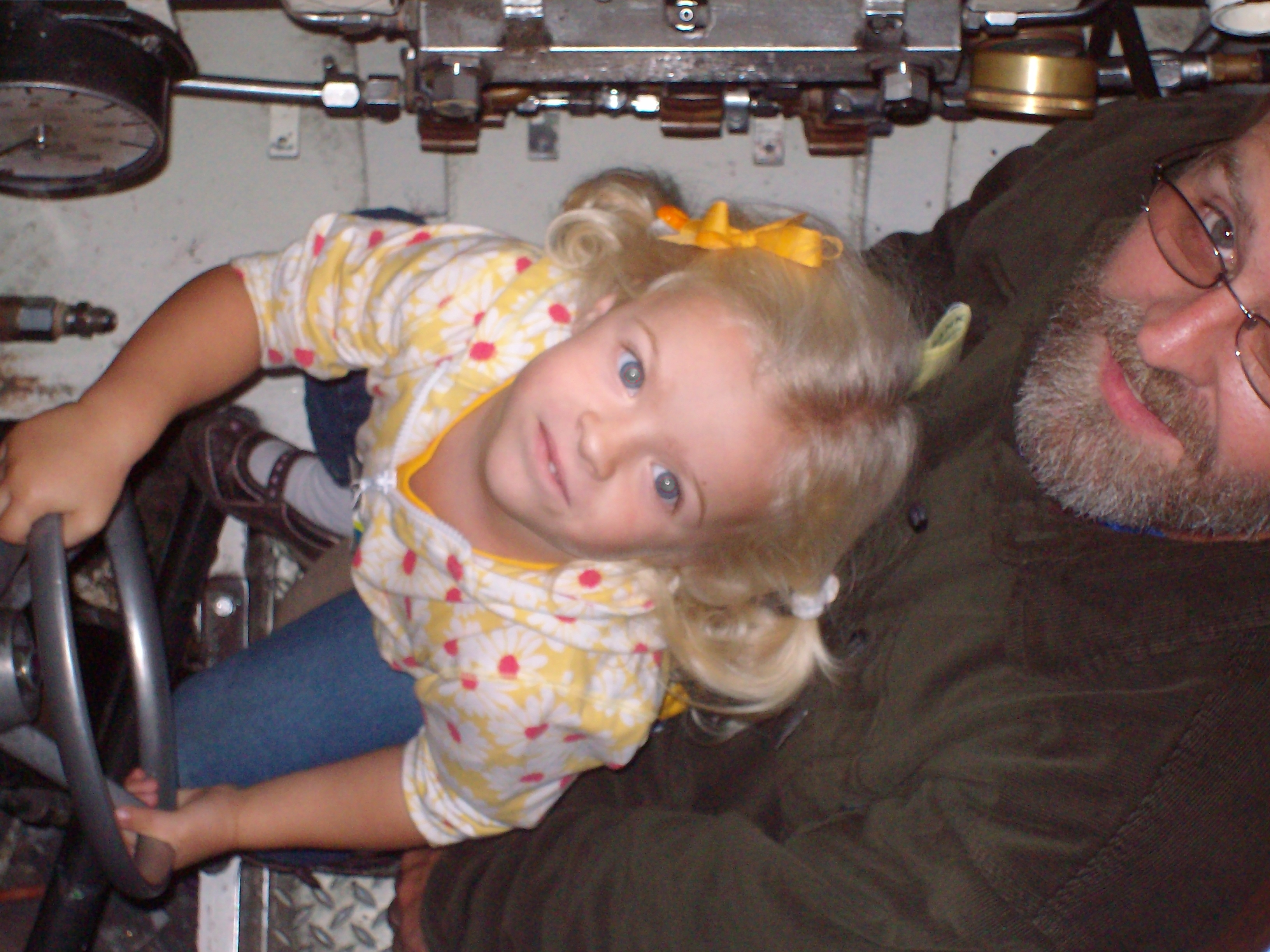
All of this research on small submarines got me to thinking about photos of my daughter and me in small submarines. When she said she wanted to be a submariner when she got bigger that made me worry (she still says this).

Elizabeth & Joe Combs in an Office of Naval Research (O.N.R.) submarine, April 2008.

Then she said she didn’t want to be in the big black submarines like papa she wants to be in the small research submarines. Now I’m breathing again. HaHaHa

I hope you enjoy my article on our other small submarine, Dr. E. Lee Spence’s Hunley. This week’s article will be published tonight at midnight New York time.

The last article in the Hunley series will be next weekend, Spence VS Cussler: Who Found the Hunley?

Comments Off on Speaking of Small Submarines

Filed under family, New, ships, submarines

Clive Cussler’s Hunley


Clive Eric Cussler

Clive Eric Cussler (Photo credit: /Stef_)

Clive Cussler has found over 60 shipwrecks; more than half are Civil War wrecks. So, it was inevitable that Clive Cussler would eventually search for the Hunley. Since the late 1800s many people have claimed to have found the Hunley; and many more have searched for the Hunley. P.T. Barnum offered $100,000 reward for the first person to prove they had found the Hunley. However, no one ever proved they found the Hunley with photographs or artifacts from the wrecked submarine. No one even knew positively what happened to the Hunley.

As always, when the topic is the United States Civil War, there were the two time-honored antagonists. Union apologists claimed the Confederate submarine’s historic first sinking of a ship was an unqualified success, as the Hunley sank itself with the Housatonic. The Union apologists claimed the blue light signal was a fabrication created by a sentry to explain why he did not report the Hunley as overdue. Confederate apologists claimed that the prearranged signal of the blue light from the Hunley proved the Hunley successfully survived the attack on the Housatonic.

Of the many possible explanations for Hunley’s loss, no one was certain what happened or where she lay. The explosion could have loosened plates in Hunley’s hull causing it to flood inside the hull; leaving the Hunley on the bottom of the harbor anywhere from the Housatonic, west to the Hunley’s pier. The concussion from the blast could have knocked the Hunley’s crew unconscious, leaving the little sub drifting east out to sea, where eventually it sank. The Hunley could have even been run over by one of the many Union ships rushing to the aid of the Housatonic, leaving it almost anywhere on the bottom of Charleston harbor.

CSS Hunley

CSS Hunley (Photo credit: AN HONORABLE GERMAN)

Cussler knew of Confederate Col.  Dantzler’s report of the blue light signal from the Hunley. He also knew of researcher Bob Fleming’s finding of the board of inquiry transcripts into the loss of the Housatonic; where crewmembers of the Union ship reported seeing a blue light low on the water. Cussler knew this proved the Hunley survived the attack, but didn’t realize the board of inquiry transcripts pinpointed the location of the Hunley to the east where it was eventually found.

In 1980, Cussler began preparations to search for the Hunley by applying for a permit from the University of South Carolina’s Institute of Archaeology and Anthropology (SCIAA). Alan Albright, the institutes lead archaeologist at that time, was cooperative but suspicious. As Cussler said in his book, The Sea Hunters:

Albright asked him, “If you find the Hunley, what then?”

Cussler replied, “That’s your problem.”

Clive Cussler founded NUMA (National Underwater Marine Agency), fashioned after the NUMA organization in his novels, to search for lost underwater shipwrecks. Even when the approximate location of a shipwreck is known, the search for a lost ship involves long tedious hours of back-and-forth searches usually in a small boat towing sonar, magnetometers, or cameras. NUMA, in its search for the Hunley, towed a magnetometer behind a zodiac boat. That first year NUMA did not find the Hunley, but they did save the lives of three boys caught in a current that was taking them out to sea.

NUMA was using a two-boat strategy in its search for the Hunley. The first would start along the shoreline going back and forth pulling a magnetometer working towards the sea. A second boat, the Coastal Explorer, would search the wreck site of the Housatonic. The first boat was mapping magnetic anomalies found with magnetometer, which would later be searched by divers from the Coastal Explorer. The second boat found the outline of the hull and the one boiler from the Housatonic, but no Hunley. Cussler even used psychic Karen Getsla on the bow of the Coastal Explorer to tune into the location of the Hunley, but nothing.

At the end of the 1980 season NUMA did not know where the Hunley was, but they did know where the Hunley was not. Cussler and his search team had searched a two-mile long grid from Breaches Inlet extending out a half-mile to sea. Cussler was now certain that the Hunley lay closer to the Housatonic.

June 1981 Cussler was back at it again. This time that permit went much more smoothly with Albright; he even offered a top-notch archaeological dive team with a first-rate outboard boat. Cussler’s NUMA search team had now grown to 17 people, including two students from the North Carolina Institute of Archaeology, and Ralph Willbanks and Rodney Warren from the University of South Carolina.

English: USS Housatonic.

English: USS Housatonic. (Photo credit: Wikipedia)

Everything ran smoothly and they had good weather. The team picked up where they left off the year before and searched an additional 16 square miles, well beyond the Housatonic. This year the team used three boats. The dive boat followed up on and checked each magnetic anomaly discovered by the search boat’s magnetometer. Most of these anomalies were old shrimp boats, barges, and 300 years worth of scrap metal. Once again, they did not find the Hunley; but they did discover five Confederate blockade runners and three Union ironclads.

One humorous side story is discovery of the blockade runner Stonewall Jackson. After more than a century the place where the Stonewall Jackson ran aground and burned was now under the beach. One day when the waves were too rough, Cussler and his team laid out grid patterns on the beach to search for the Stonewall Jackson. The plan was to walk the grid with metal detectors, and if not found, set up a new grid and continue the search. After setting up the first grid pattern on the beach Cussler tried to calibrate his metal detector. However, each time the needle went off scale. Clive checked the batteries, wires, and connectors. Still the needle went off scale. Finally, Clive realized that not only had they laid out the first grid pattern exactly overtop of the Stonewall Jackson, but that he was standing right above the engines trying to calibrate his metal detector. If only all searches were this quick and easy.

When the season ended Cussler and NUMA had found no less than eight Civil War shipwrecks, but no Hunley. It would be 13 years before Cussler would return to his search for the Hunley.

July 1994 found Cussler once again at the South Carolina Institute of Archaeology. The new people at the Institute, instead of issuing a permit, suggested they make it a joint venture and Cussler agreed. In his book, The Sea Hunters, Cussler describes this only by saying “not a wise move on my part as it turned out.”

This season Cussler hired Ralph’s company, Diversified Willbanks, with their search boat called Diversity. Ralph Willbanks had left the university and started his own underwater survey company since Cussler had search for the Hunley in 1981. The University supplied the dive boat with sport divers who paid for the privilege of diving on the Hunley. The universities chief project investigator was constantly announcing that every anomaly they dove on had same dimensions as the Hunley. The target he was most enthusiastic about was eventually revealed as an old steam engine. NUMA’S third boat was a 15 foot outboard boat with a gradiometer for searching shallow areas. The 1994 season ended with another 10 square miles searched, more antique scrap iron, but no Hunley.

Css hunley cutaway

Css hunley cutaway (Photo credit: Wikipedia)

Because of Confederate Col. Dantzler’s report, Cussler had concentrated his search between Breach Inlet and the Housatonic, but no Hunley. The only thing left to do was to expand the borders of the search grids. Cussler flew back to Colorado to write more books to pay for the search for the Hunley, a debt that would grow to more than $100,000 before the search was over.

Cussler contracted Ralph Willbanks and West Hall to keep searching for the Hunley in their free time. The rest of 1994 and on into 1995 right up until May 4, Clive Cussler back in Colorado would fax new search grid patterns to Ralph in Charleston, and Ralph would phone back to Colorado with search results. On May 4, 1995, Ralph phoned Clive with another update. Ralph said he would be sending Clive his last bill. Disappointed, Clive thought Ralph was giving up. No, Ralph had found the Hunley, and they had photographs. The Hunley was actually found on the afternoon of May 3, 1995, but Cussler wasn’t home when Ralph called.

Clive Cussler’s penchant for hiring good people paid off. In the end it was not Cussler’s grid patterns that found the Huntley, but Ralph’s hunch. Ralph had decided to return to the Housatonic site and work farther east. The Hunley was 1000 yards east and slightly south of the Housatonic. On May 11, 1995, Clive Cussler and the rest of the NUMA team flew out to join Ralph and Wes for a press conference, beside the replica of the Hunley in front of the museum in Charleston, where they announced to the world the discovery of the H.L. Hunley. They provided video and still photos of the wrecked Hunley on the harbor bottom, to the press.

Then all hell broke loose, but that is a future article in this series.

To learn more about Cussler’s discovery of the H.L. Hunley as well as a dozen other wrecks found by NUMA, I suggest reading The Sea Hunters, by Clive Cussler and Craig Dirgo.

Next Sunday’s Article:

E. Lee Spence’s Hunley

Learn about Dr. Spence’s discovery of the H.L. Hunley in 1970.

Our Other Hunley Articles:

The Submarine H.L. Hunley

The Hunley Blue Signal Light

Dr. E. Lee Spence’s Hunley

Spence VS Cussler: Who Found the Hunley

Back to the H.L. Hunley

Related articles

5 Comments

Filed under New, ships, submarines

The Submarine H. L. Hunley


English: Confederate Submarine H.L. Hunley. Se...

English: Confederate Submarine H.L. Hunley. Sepia wash drawing by R.G. Skerrett, 1902, after a painting then held by the Confederate Memorial Literary Society Museum, Richmond, Virginia Deutsch: Illustration des U-Boots „Hunley“ von R. G. Skerrett, 1902. (Photo credit: Wikipedia)

The story of the Hunley begins in the winter of 1861/62 in New Orleans with two steam gauge manufacturers, James McClintock and Baxter Watson. At the beginning of the war, the Confederacy had no navy and little money to build one. The Confederacy decided to use privateers as a way to put ships at sea to oppose the United States Navy. McClintock and Watson intended to build a submarine, apply for a Letter of Marque from the Confederacy, and attack United States shipping for profit. It was while building this first submarine, Pioneer, that Horace Hunley joined McClintock and Watson. On 31 March 1862, the men received a Letter of Marque from the Confederates States.

(Privateers are not pirates. Often governments will authorize, with a Letter of Marque, private ship owners to attack enemy shipping. The ship owner must prove he has a seaworthy ship and trained crew. When a privateer sinks or captures an enemy ship they report to a maritime court (in the United States this is any federal court) where a value is affixed to the captured or sunk ship and its cargo. The privateer receives half of the value and the government half. The privateer must follow all rules of war and comes under the control of the government that issued the Letter of Marque. Privateers are not as efficient as navy ships, but it is an effective way to put a large fleet of ships at sea to oppose an enemy.)

Français : Photographie d'Horace Lawnson Hunle...

Français : Photographie d’Horace Lawnson Hunley, qui réalisa notamment pendant la Guerre de Sécession un submersible pour soutenir les Confédérés. (Photo credit: Wikipedia)

One month after the Pioneer was completed; New Orleans fell to the United States. McClintock, Watson and Hunley scuttled the Pioneer so it would not fall into enemy hands. They gathered all of their diagrams and notes and left for Mobile, Alabama to build a second submarine. Pioneer was a very seaworthy boat, but with Pioneer II, they would experiment with submarine features not successfully used until the 20th century.

English: Confederate Submarine H.L. Hunley. Cu...

English: Confederate Submarine H.L. Hunley. Cutaway drawings published in France, based on sketches by William A. Alexander, who directed her construction. Deutsch: Schnittzeichnung des U-Boots „Hunley“. Zweite Hälfte des 19.Jahrhunderts. (Photo credit: Wikipedia)

The three built an electric motor to power their new submarine. Unfortunately, the motor did not have enough power to propel the submarine effectively. Next, they decided to use steam power. It was during this time that William Alexander joined the design and construction team. Once again, the mode of propulsion was unacceptable, the steam engine was removed from Pioneer II, and it was decided to use a hand crank to power the submarine. In early February 1863, the Pioneer II was lost; most likely while attempting to attack the United States blockading fleet at Mobile, Alabama.

Confederate Submarine H.L. Hunley, suspended f...

Confederate Submarine H.L. Hunley, suspended from a crane during her recovery from Charleston Harbor, 8 August 2000. (Photo credit: Wikipedia)

By the spring of 1863, our group of submariners joined with the Singer Submarine Corps (also known as the Singer Secret Service Corps). This next submarine would cost $15,000 to build, a large sum of money in 1863. Mr. E.C. Singer, of the Singer Submarine Corps, invested $5,000, Horace Hunley invested $5,000, and the remaining $5,000 came from a group of private investors. Later when more money was needed, Horace Hunley would provide the additional funds.

Charleston, S.C. (Jan. 28, 2005) – Civil War C...

Charleston, S.C. (Jan. 28, 2005) – Civil War Confederate submarine Hunley conservators Philippe de Vivies, left, and Paul Mardikian remove the first section of the crew’s bench at the Warren Lash Conservation Lab in the former Charleston Navy Shipyard, S.C. Archaeologists and conservators are hopeful that once the bench is removed, they will discover new Hunley artifacts. Photo courtesy of Naval Historical Center (RELEASED) (Photo credit: Wikipedia)

In July 1863, the H.L. Hunley (named after the largest investor in the submarine) slid into the harbor for the first time. The Hunley incorporated knowledge learned from Pioneer and Pioneer II, and benefitted from the additional designers and engineers who had joined the project since 1861. Modern historians and academics greatly underestimated how advanced this submarine was, until it was raised in 2000. The most surprising feature discovered after the submarine was raised in 2000 is internal frames spaced every three feet to strengthen the hull, just as the modern United States Navy’s nuclear powered submarines have.

Two U.S. Navy submarines come alongside the fl...

Two U.S. Navy submarines come alongside the fleet ballistic missile submarine tender USS Hunley (AS-31) at Navy Fleet Ballistic Submarine Refit Site 1 at Holy Loch, Scotland (UK), on 1 December 1985. (Photo credit: Wikipedia)

The Hunley passed all its sea trials successfully. Next, the Hunley made a demonstration for high-ranking Confederate officers in the Mobile River. The Hunley submerged to twenty feet and approached a coal barge using its depth gage and compass. Behind the Hunley on a towrope was a powder keg with contact detonators. After destroying the barge, the Hunley surfaced and returned to shore.

English: Charleston Navy Yard, S.C. (Mar. 7, 2...

English: Charleston Navy Yard, S.C. (Mar. 7, 2003) — The pocket watch that belonged to the commanding officer of the Civil War-era submarine “H.L. Hunley,” Lt. George Dixon. The watch was retrieved from the Hunley and archeologists hope to use it to determine the time the sub sank on February 17, 1864. U.S. Navy photo. (RELEASED) (Photo credit: Wikipedia)

After the successful demonstration the Confederate officers were anxious to put the Hunley to use against the blockading fleet of the United States. Mobile Bay was shallow and the United States ships too far out to sea for the Hunley to be used effectively, so it was decided to send the submarine to Charleston, South Carolina. The commander of Mobile, General Slaughter, sent a letter of introduction to the commander of Charleston, General P.G.T. Beauregard, on 31 July 1863. Admiral Buchanan in Mobile also sent a letter to his counterpart in Charleston, Admiral Tucker.

Revised 2:3 ratio Stainless Banner battle ensi...

Revised 2:3 ratio Stainless Banner battle ensign (never flown aboard CSS Albemarle) (Photo credit: Wikipedia)

In early August 1863, the Hunley was lifted onto two flatbed cars at the Mobile train station and strapped down, to be shipped to Charleston. Due to the size and weight of the submarine this was no easy task.

Civil War Submarine H. L. Hunley (Replica)

Civil War Submarine H. L. Hunley (Replica) (Photo credit: hyperion327)

After arriving in Charleston, the Hunley made three nighttime raids into the harbor in the third week of August, but did not sink any ships.  After more failed and cancelled attempts to sink ships of the United States Navy, the Confederate Army seized the submarine from its owners and turned it over to the Confederate Navy. (This is important when we discuss the salvage of the Hunley in a later article). The Confederate government determined the value of the submarine to be $27,500, but there is no evidence that shows this sum was paid to the owners. The inexperienced navy crew was docking the submarine on 29 August 1863 when something went wrong and the submarine submerged with the hatches open and the crew inside. Four men escaped and five men drowned. On 13 September 1863, the Hunley was raised.

Civil War Submarine H. L. Hunley (Replica)

Civil War Submarine H. L. Hunley (Replica) (Photo credit: hyperion327)

On 19 September, General Beauregard turned the submarine over to Horace Hunley. It is not clear, if ownership was transferred or only the operational control of the submarine. On 15 October 1863, with Horace Hunley at the controls the submarine Hunley was making practice attacks on the CSS Indian Chief when something went wrong and the submarine sank with a loss of the entire crew. After being raised and dry-docked for maintenance, the Hunley was ready for operations by 14 December 1863.

English: Charleston Navy Yard, S.C. (Mar. 7, 2...

English: Charleston Navy Yard, S.C. (Mar. 7, 2003) — Senior Conservator of the Civil War-era Confederate submarine the H.L. Hunley, Paul Mardikian, uses a microscope to examine a pocket watch that belonged to the sub’s commanding officer, Lt. George Dixon. The watch was retrieved from the Hunley and archeologists hope to use it to determine the time the sub sank on February 17, 1864. U.S. Navy photo. (RELEASED) (Photo credit: Wikipedia)

It was during this time the Hunley was fitted with a spar type torpedo and would use this on future attacks instead of the towed powder keg. On the night of 14 February 1864 the Hunley ventured forth on what would be its last patrol. This was the night that the Hunley successfully attacked and sank the USS Housatonic. Shortly after the torpedo exploded and the USS Housatonic sank, with only its masts remaining above water, a Confederate sentry saw the signal from the Hunley for the lamp on shore to be lit to aid the submarine back to its dock. The signal was a blue light shown by the Hunley. The historians and academics deny the signal was given, and claim the blue light seen was a lie because the Hunley sank with the Housatonic and never had a chance to send the signal.

English: USS Housatonic.

English: USS Housatonic. (Photo credit: Wikipedia)

Since 14 February 1864, most historians and academics alike called the sinking of the USS Housatonic an unqualified success because, as they stated, “the Hunley sank the Housatonic and itself.” Though there were three separate salvage operations to remove parts of the Housatonic (it was considered a hazard to navigation) without any trace of the Hunley found, the professionals continued in their belief that the Hunley sank underneath the Housatonic.

English: Naval Historical Center, Navy Yard, W...

English: Naval Historical Center, Navy Yard, Washington D.C. (Feb. 21, 2003) — This Civil War-era wallet was discovered by Naval Historical Center archeologists during their excavation of the Confederate submarine H.L. Hunley. The archeologists stated that the wallet was in remarkably good condition. Hunley became the first submarine in history to sink a warship during the Civil War in 1863. Photo by Chris Ohm. (RELEASED) (Photo credit: Wikipedia)

Then 120 years after that historic night a package of papers were found in the archives of Suitland, Maryland. These papers were the 115 pages of handwritten testimony from the United States Navy Inquiry into the loss of the USS Housatonic. Sealed with a wax seal these papers had never been read. It was in the testimony that a seaman Fleming from the Housatonic testified that as he was in the rigging watching the USS Canandaigua coming to their rescue he saw a blue light appear on the water just in front of the Canandaigua and off the stern quarter of the Housatonic.

US Navy 030221-O-0000O-002 Scientists at the W...

US Navy 030221-O-0000O-002 Scientists at the Warren Lash Conservation Center examine a Civil War-era wallet found during excavation of the Confederate submarine H.L. Hunley (Photo credit: Wikipedia)

The location the H. L. Hunley was found in proves that the Hunley successfully attacked the Housatonic, and then withdrew to wait for the incoming tide to return to its dock. It was while the submarine was waiting on the tide to shift that the USS Canandaigua (unaware of the Hunley’s presence) ran over and sank the submarine.

The Hunley

The Hunley (Photo credit: Wikipedia)

The blue light controversy is one of several controversies surrounding the Hunley, including who actually found the Hunley, Clive Cussler or Dr. E. Lee Spence.

Next week’s article will be on Cussler’s discovery of the Hunley. The following week will be on Dr. E. Lee Spence’s discovery of the Hunley.

To learn more about the Hunley and the men who designed, built, and sailed her I highly recommend The Hunley: Submarines, Sacrifice & Success in the Civil War, and Submarine Warfare in the Civil War, both by Mark K. Ragan. I have Submarine Warfare in the Civil War in my print library, and have thoroughly enjoyed the book.

Our Other Hunley Articles:

Clive Cussler’s Hunley

The Hunley Blue Signal Light

Dr. E. Lee Spence’s Hunley

Spence VS Cussler: Who Found the Hunley

Back to the H.L. Hunley

Related articles

6 Comments

Filed under New, ships, submarines