This Sunday will be the first in a two part series “Pirates, Spies, and Submarines.”
The series is centered around a city I grew up in, and as the title implies, it is about pirates, spies and submarines.
See you Sunday, have a great day.
This Sunday will be the first in a two part series “Pirates, Spies, and Submarines.”
The series is centered around a city I grew up in, and as the title implies, it is about pirates, spies and submarines.
See you Sunday, have a great day.
Comments Off on The Article For Sunday 18 May 2014
Filed under New
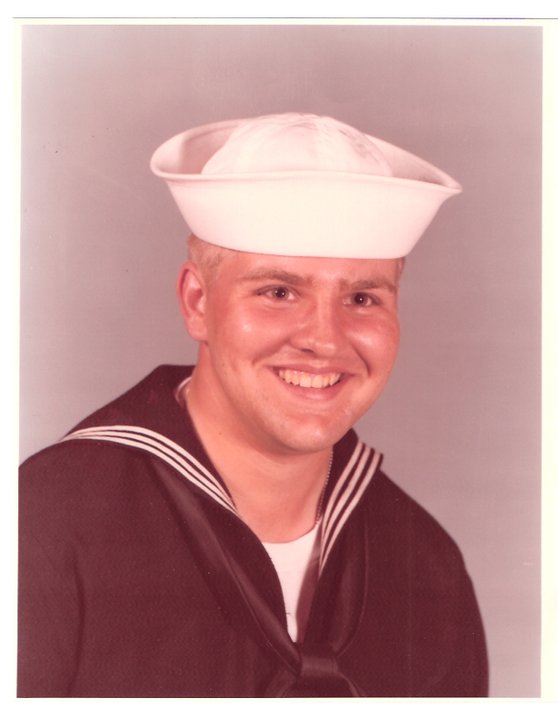
Joe C Combs 2nd First offical navy portrait November 1980.
This week’s article was written, but on Friday I scrapped it when I heard of the sad demise of a veteran. Sara was six years older than me, but you would have never known that when she was on active duty in the Navy. She served for thirty-eight years, and took part in action from Vietnam to Operation Desert Storm, but she spent most of her time in the Mediterranean. During the 1980s, when Navy planes were called upon to take action in the Middle East or North Africa they most likely came from the decks of the mighty USS Saratoga, CV-60. She Was a Forrestal class carrier and unlike the newer carriers was a conventionally powered ship. The newer carriers are all nuclear powered. But this did not slow her down at all; she could make 35 kts. or better.
She was the sixth US Navy ship to be named for the Battle of Saratoga in the American Revolutionary War, and the second aircraft carrier. She was decommissioned in 1994 and since then there have been many attempts to preserve her as a museum, but Friday the Navy announced it paid one cent to ESCO Marine of Brownsville, Texas to dismantle and recycle her.
She had a colorful career. In 1960, she was involved in a collision with a merchant ship. There were also a few shipboard emergencies during her career, like all ships. One fire in 1961 claimed the lives of seven crewmen. The Sara returned to the shipyard for repairs after she completed her patrol in the Med.
In 1967, just after she arrived in the Med, she was called on to care for the crew members of the USS Liberty after the Liberty was attacked by the Israeli’s during the 1967 Arab-Israeli War.
President Nixon, the second president the Sara hosted, was onboard the Sara in the Mediterranean when President Gamal Nasser of Egypt died. The concern was his death could plunge the entire Middle East into a crisis, and the president left the next morning.
It was seven F-14 Tomcats from the Sara that caught up with the terrorists from the Achille Lauro and forced them to land their plane in Italy, where Italian authorities arrested the terrorists. This was on orders of President Reagan. President Reagan used the Saratoga quite a bit. When Libya declared the international waters of the Gulf of Sidra were the territorial waters of Libya the Saratoga was sent into those waters.
The Sara made many firsts during her career and broke numerous records; and on more than one occasion off-loaded less ordinance than she on-loaded. A book could be written about the exploits and career of the Saratoga. We did not even touch on the daring rescue of one of her downed pilots in Vietnam. He was snatched from in front of the enemy by helos and returned to the Sara. We also did not talk about the time an enemy president claimed to his people on TV the Saratoga had been sunk.
The Saratoga should have been made into a museum. She was a great symbol of war time and peace time history. She weathered real and metaphorical storms, but she always came out on top and was always on the front lines ready to defend the people back home when needed.
So long old girl, you served us faithfully, fair winds and following seas my lady.
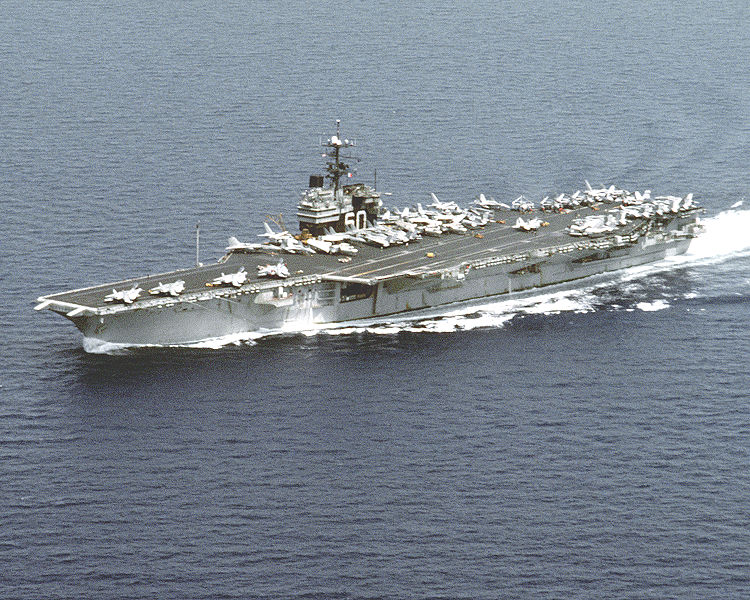
USS Saratoga CV-60
http://en.wikipedia.org/wiki/File:USS_Saratoga_(CV-60)_underway_port_side_aerial.jpg
Comments Off on Fair Winds and Following Sea to Sara
Filed under New
As many of your already know April is a very hard month for me. But, May? Ah!
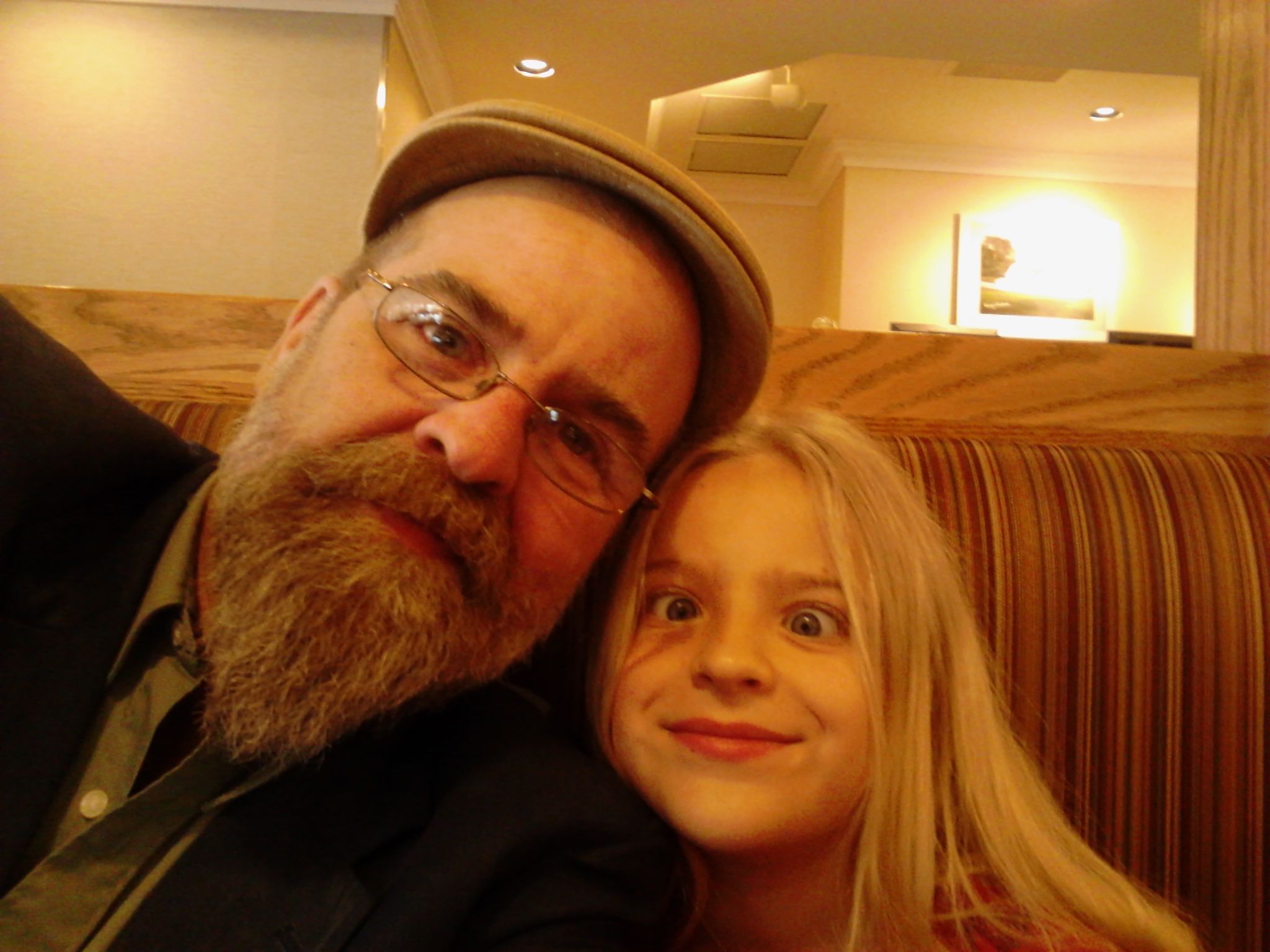
Today was the first Kentucky Derby in decades I have not watched, and I didn’t even notice. My baby, my little one, the babe I held in the palm of one hand (in what seemed like just last week) turned nine years old today. My daughter’s birthday is always the best father’s day of the year for me.
Which brings me to a question for all you dad’s out there.
Dad what do you do when your daughter gives you a pink friendship bracelet?


You wear it – of course.
Love you Pumpkin, Happy Birthday Sweetheart.
This one is for you, you will never know how happy you make me.
None of us are perfect. Yeah, we’d like to be, but it is not going to happen. So, get over it.

We are not perfect, but we can have a good life. And you know what? It is a lot easier than you think …

Just remember …

Comments Off on I Started Over Today … and You Can Too
Filed under New
First, we will look at the accepted version of Titanic’s sinking, and its evolution.
In 1912, it was believed the Titanic went down in one piece with the stern rising 90 degrees in the air, pausing, and then sinking beneath the waters; as most survivors claimed.
On 1 September 1985, the wreck of the Titanic was found by Dr. Robert Ballard. The wreck was found in two pieces the bow section almost 2,000 feet from the stern. The bow is relatively intact, but the stern looks like it was the victim of an explosion. This proved the ship did not sink intact, but broke up on the surface then sank.
The decks of the Titanic on the bow section at the break were collapsed down upon themselves. The explanation was, “Yeah, that must have happened when the Titanic hit the ocean floor. It hit with such force it collapsed those decks.” The reason for the stern section being in such bad shape? The experts could not explain it and did not know what happened to the stern.
From 1985 until 2008, this was the accepted theory, with slight modifications over the years.
Then in 2008, the book “Titanic’s Last Secrets,” came out. This book is about the research and Titanic exploration of the renowned wreck divers, shipwreck historians, and explorers Richie Kohler and John Chatterton (Deep Sea Detectives series on History Channel). They found two pieces of the double bottom of Titanic. They had the steel examined by experts. The conclusion? The steel would have been so brittle at the 30 degrees water temperature when Titanic sank that the keel would have only supported the stern rising to between 7 and 11 degrees before breaking. At this colder temperature the steel would not bend and stretch, it would fracture and break clean as if cut by a knife. So, now the new mainstream theory was the Titanic stern did not rise between 45 degrees and 90 degrees (as most survivors claimed), but only to about 11 degrees.
I didn’t buy it, I didn’t buy it in 1985. For one thing, if the force was so great to collapse thick heavy decks on the bow, what about those flimsy deckhouses? I looked at the ocean currents in the area at that time, and how long the stern remained on the surface after the bow disappeared. The two halves should have been a lot further than 2,000 feet apart if the accepted theory of the sinking were correct. I believed the ship broke on the surface, but not into separate halves. With the bow filled with water it would have been pulling on the stern, and the air-filled stern would have been more buoyant and resisted the bow. If the stern pivoted on the broken, but still attached section (like a hinge), it could indeed rise between 45 and 90 degrees into the air as the bow sank even deeper in the water. The stern needed something of weight beneath the water to allow it to rise straight into the air. Take an empty glass, turn it upside down and stand it on water in a water-filled sink. When you let go the glass falls over it cannot stand. The stern should not have been able to stand without the bow attached to it. There had to be a way of explaining what ALL of the witnesses saw and what the scientists discovered. I thought my 1985 theory was it.
I studied the published work of Kohler’s and Chatterton’s experts, and realized they did not take into account the temperature of the decks inside the Titanic, decks that were made from the same steel (though at a different thickness) as the keel and hull plates.
The wealthy women survivors testified to giving their coats and shawls to the handful of survivors from Titanic’s engineering department. These men were dressed in very thin clothing. The Titanic’s engine room was very hot, and the boiler rooms (where the steam was made) could reach temperatures over one hundred degrees. The decks in those areas would not be at freezing temperatures, they would not be brittle but, would stretch and bend instead of fracturing and breaking.
The night Titanic sank, the bow filled with water going lower and lower into the water raising the stern into the air. At an angle between 7 and 11 degrees, two sections of the Titanic’s double bottom broke free from the ship. The weight that had been borne by the keel was now transferred to Titanic’s interior decks and bulkheads (floors and walls), and they collapsed under the weight, pancaking down on each other above where the double bottom broke away. The stern settled back on an even keel and then began to rise into the air, as witnesses stated.
As more air escaped the stern, eventually the bow pulled the stern under. At a point, most likely less than 1,000 feet, the stern would have gone deep enough that the sea pressure would have exceeded the strength of the stern. At this point, the stern imploded separating the two halves of Titanic. The few remaining air pockets and the effects of the implosion would slow the stern down in its decent enough to land on the ocean floor 1,970 feet from the bow.
No evidence or witnesses discounted, the laws of science taken into account.

"Your comments have encouraged, inspired, and overall put a smile on my face. I am nominating you for the Prego Project Award as a BIG thank you for your support… It means the world to me!!" www.pregoandtheloon.wordpress.com/
 joeccombs2nd
_underway_port_side_aerial.jpg)