
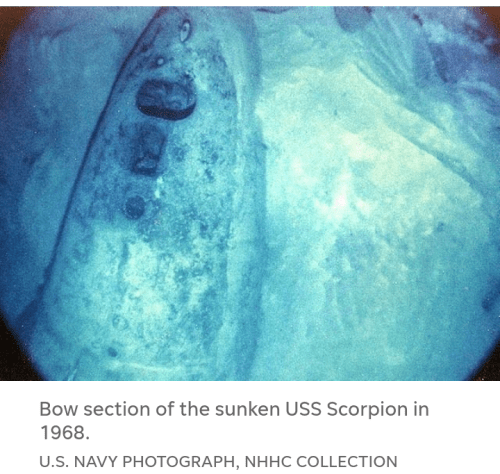
 I have written other articles and one poll on the USS Scorpion (you may search my archives to find them), so I will not rehash those articles now. May 27, 2018, marks the 50th anniversary of the loss of the USS Scorpion and the 99 men aboard her. The last time the Scorpion left port it’s underway was momentarily delayed so that a crewman could leave the ship to fly back to Norfolk, Virginia on emergency leave. He was on pier 22 that rainy Memorial Day 50 years ago, waiting with the families for the return of his ship and his shipmates. I salute the 100th member of the crew as well, and thank him for his many years of service to the submarine service. What actually sank the USS Scorpion has still not been settled. Unlike the USS Thresher, which was lost 5 years before the Scorpion, the United States Navy still considers the loss of the Scorpion a matter of national security and keeps part of the official record classified to this day. Decades after all the material on the loss of the USS Thresher as been declassified. The USS Thresher is in 15,000 feet of water off the coast of New England, and is in the condition you would expect of a submarine which imploded. However, much of the USS Scorpion looks recognizable. Though the engine room was forced inside the machinery room and the sail (conning tower in the Hollywood movies) was separated from the ship, large portions of the sub look as it did when she was tied up in port. What we do know about the USS Scorpion is that her last overhaul was supposed to be three years. But, was cut to less than a year as a cost saving measure by a Defense Department dealing with the increasing costs of the war in Vietnam. (After the loss of the USS Scorpion this cost saving measure was discontinued). We also know that the Navy has a few dozen photographs and no video footage of the wreckage on its archive website. The navy claims this is all the film it has on the Scorpion wreckage. Dr. Robert Ballard in his memoirs details the weeks he spent (just before finding the Titanic) taking still and video film footage of the USS Scorpion for the navy as well as checking on the integrity of nuclear material at the site. (All of the nuclear material is safe and has not contaminated any of the ocean or sea floor). None of Dr. Ballard’s still or video photography is even acknowledged by the United States Navy to exist, and certainly not allowed to be seen by the families or the public. The time has come for the United States Navy to declassify all the material the navy and the United States government has on the Scorpion. Not to fuel another book or movie, not to fuel the public’s morbid curiosity, not to satisfy the thousands of submariners who have never forgotten the Scorpion or her crew, but to give closure to the families and loved ones of the entire crew of the USS Scorpion. Wives, daughters, sons, siblings, mothers, fathers, and loved ones will never be able to visit the grave of their loved ones. But they do deserve the closure of knowing the entire story of the final chapter of the USS Scorpion and their loved ones still on eternal patrol. If the navy does not want to release that information to the public, I as a submarine veteran, support that, but only on the condition that they DO release that information to the families. Any submariner will tell you the things we did under the sea were only possible because of the support we received from our loved ones back home. The families deserve the full unabridged story, even if that story cannot yet be made public. Mr. President, Mr. Secretary, Chief of Naval Operations – it has been 50 years. The time has come for you to give closure to the families. To the families of the USS Scorpion and USS Thresher, I want to tell you that your loved ones live on in the heart of every sunmariner world wide. I have personally heard the stories of submariners from the Soviet Navy, British Navy, Canadian, Navy, French Navy and others. They always speak of the exact moment and what they were doing the moment they heard of your loss. They all speak of the shock and the difficulty in believing that such an event actually happened. They also speak of changes in the design, construction, and operation of submarines after that loss. Then they go on to tell of specific incidents where those changes were responsibly for their own submarines being able to return to port after an emergency while submerged at sea. Your husband’s, your daddies, your brothers, your sons; they did not die in vain. They have saved the lives of unknown thousands of their brothers and sisters, some of whom continue to go to sea on submarines. We will never forget your loved ones. And as long as men and women continue to wear dolphins (submarine warfare pin) WE will always be your family. May God bless and keep you all.
Category Archives: history
USS Scorpion
Filed under history, ships, submarines, USS Scorpion
USS City of Corpus Christi SSN-705
Comments Off on USS City of Corpus Christi SSN-705
Filed under history, navy, New, submarines
Monturiol Inventor, Writer, Publisher, Activist, and Submariner
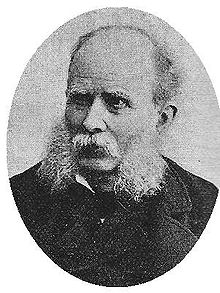
Narcis Monturiol
Narcis Monturiol, born 28 Sept 1819, died 6 Sept 1885. Now, on to the man, he graduated law school but never practiced law. He became a writer and publisher, inventor and politician. He was a socialist who wanted to create a utopian community where people could live together, “each according to his ability, each according to his needs.” He also produced Spain’s first communist newspaper. In 1848, one of his publications was suppressed by the government and he was forced into exile in France. When he was allowed back in the country his publishing activities were greatly curtailed. By 1868 he was a member of the Assembly. Just a few of his other inventions included a machine for making cigarettes, a method for preserving meat, and a rapid-firing cannon, as well as a continuous printer.
One of his most remarkable inventions was the Ictineo. A submarine he hoped would help coral divers and save lives. Considering Ictineo I was finished and performed its first dive in September of 1859, it was a pretty remarkable submarine. Monturiol studied all of the available materials and the work of other submarine inventors before designing his submarine. He sought assistance from the government, when he was turned down he went to the people of Spain. More than 300,000 pesetas came in from the people of Spain and Cuba to help him build his submarine.
The submarine handled great, but the speed was disappointing. Like so many submarines designed in the 19th century it was powered by manpower. The submarine successfully completed more than 50 dives before a cargo ship ran into it while it was tied up at its berth. On 2 October 1864 Ictineo II was launched.
The submarine had a double hull with ballast tanks in between the hulls. The submarine’s pitch could be controlled with a weight on a rail that ran the length of the submarine enabling the submarine to hover. This was a feature that submarines would not have again for almost 100 years. The shape, like modern submarines, was that of a fish so that it would move through the water better. He developed his own method of navigating and used calcium hydroxide to remove carbon dioxide from the air.
Monturiol performed many experiments to find a better propulsion system for his submarine. He came up with a chemical process that produced enough heat to run a small steam engine which almost doubled his speed to 4.5 knots (5.2 mph – 8.3km/h). His chemical process produced oxygen as a byproduct.
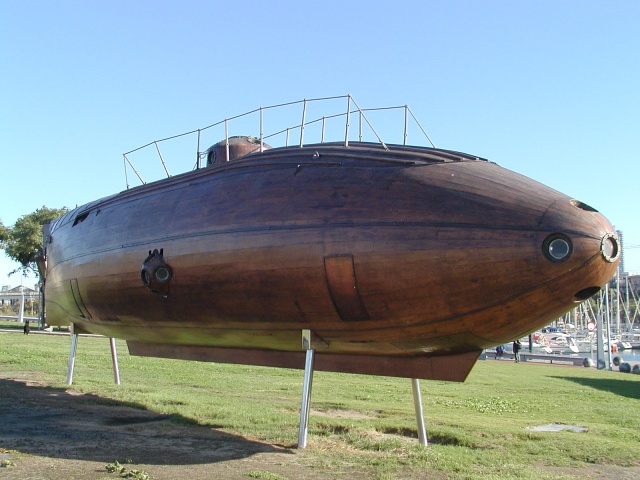
Source of image: Ictineo II replica at the harbour of Barcelona taken on October 2003
Author: Flemming Mahler Larsen
Unfortunately, by the time Ictineo II was finished and tested Monturiol was bankrupt. His submarine was sold at auction to cover his debts. The Spanish government taxed ships, so the new owner broke up the ship and sold it for scrap.
Many of Monturiol’s innovations were not seen in submarines again until the twentieth century. And Ictineo II was the first submarine designed and built that could operate without the need of oxygen from the surface. A capability the Germans experimented with during World War Two, but which was not fully realized until the nuclear powered submarines of the second half of the 20th century. The United States submarine USS Nautilus SSN-571 was the first nuclear powered ship in the world when it went into service in the late 1950s.
There were many men around the world during the 19th century who were working hard to build a viable submarine. Most had little or no help and used the materials they already had. Some of the would be inventors never realized their dream of building a submarine. Of the one who did, some died in their craft, others successful and a few even acquired fame (at least locally) for their underwater craft.
Unfortunately, very little is known of the majority of these 19th century submarines. The only ones that are still in existence are the ones which sank and were recovered much later. The designs and drawings for these 19th century wonders have been lost to time for the most part. Often only a few sketches or a newspaper article is all that remains. Even fewer photographs have survived.
That adventurous spirit still survives though. There are men and women who are determined to build their own miniature submarines to this day, and they share their knowledge, ideas, results, and photos in online groups and chats set up for armature submarine designer/builders. Once someone is “bitten by the bug” it is an addiction that won’t go away.
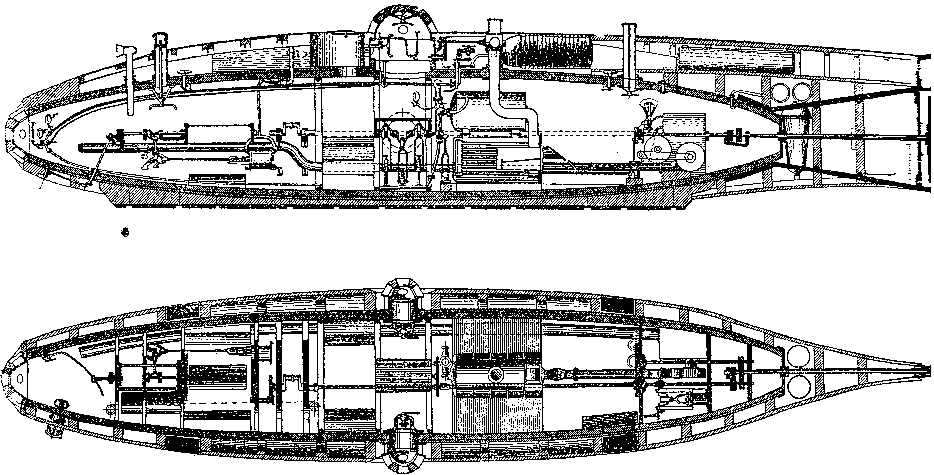
Original: Drawing from Author, 1858. Photograph is my own work.
The author of this photo did not include his name. If you know who the author is, please contact us so we may give him/her credit.
Comments Off on Monturiol Inventor, Writer, Publisher, Activist, and Submariner
Filed under history, New, ships, submarines
Super Plane


On Saturday during thanksgiving break I went on a trip to South Carolina.
My dad’s old friend that he grew up with (named Martha) let us stay at her house in the guest bedroom, she treated us like family. She also made it possible for me and my dad to go see the super plane with the pilot named Chris and his wife named Jen.
Chris gave me, my dad, and Martha a tour INSIDE of a really cool plane first when we got in there was a lady in uniform saying watch the rollers or you’ll slip and fall on your behind. At first I thought to myself ‘’rollers what are rollers?’’ Well I asked a question and I got an answer. Rollers were the things on the floor that rolled back and forth on the ground. I guessed it was so it would be easier to get the big crates around the plane but just to be sure I asked Chris and it was just as I suspected.
I asked a lot of questions and got to see the second floor that I called the top deck. It was where the pilots would steer the plane. There was also two bunks behind the pilot chairs, I got to sit in them!
One of the questions I asked was about a device that if oxygen was escaping you you’d press a couple of buttons (I guess they would get the oxygen flowing or something) and then pull a mask over your head.
It was a really cool and a really big plane and I mean SUPER BIG.
ACKNOWLEDGEMENTS
I would like to say thanks to Martha for making it all possible, thanks to Chris for showing me around the plane, thanks to Jen for being super nice and helpful, and thanks to my dad for giving me the opportunity to write this article… also thanks for listening. : )

 joeccombs2nd