Category Archives: family

A Change of Plans


I had my article for this week finished last weekend (I felt pretty good about that). Then I heard something on the radio that changed my plans. More than 2,000,000 (that’s two million (geez)) families in Ohio have had to turn to a food bank so far this year just to feed their families. These are my neighbors, co-workers, the people I see on the street, and the guy that cut me off on I-270 yesterday. That is too many. So, I decided to share something I do when I have my daughter on the weekend.

Now a cook I am not and this is not a cooking blog, one thing my daughter’s mother and I agree on. But, I think it is important for all of us to help each other. No matter how easy or rough your life may be there is always someone you can help. Let’s face it if I can cook this and have it taste good, anyone can. Don’t just use it when money is tight though, like I said it tastes good and is quick to prepare.

This is easy, simple, and inexpensive; you can feed a family of four a good, hot meal for less than $4. This is also easy to adjust if you are feeding more than four people. All you need are three ingredients, a dish, and about 15 to 20 minutes.

Ingredients:

Instant Mashed Potatoes

Instant Mashed Potatoes (Photo credit: Wikipedia)

1 package of single serving instant mashed potatoes ( $1.00 at Kroger’s).

1 can of gravy ($1.00 on sale at Kroger’s).

Biscuits

Biscuits (Photo credit: tiexano)

1 can of womp biscuits ($1.50 on sale at Kroger). You know womp biscuits, they come in a can, you rip the paper off the tube and womp them against the counter to open them. Usually the can says to bake them for about 15 minutes.

Now we’re cookin’:

Pre-heat your oven to the temperature on the can of biscuits. Put the instant mashed potatoes in the dish, add hot water as per directions on the package. Next you pour the can of gravy on top of the mashed potatoes. Last you womp the biscuits open and place them on the gravy covering the dish. Stick in the oven for the amount of time suggested on the biscuit tube (usually about 15 minutes). When the biscuits get a light brown … you’re done.

The great thing about this is that you can add other things YOU like, or increase the amount of the three ingredients if you are having more than four people for dinner. I like to cook a little hamburger (breakup the patty into small pieces) and add that in with the gravy.

If you buy the big box of instant potatoes and make your own gravy you can save even more money, AND it is hot and tastes pretty good.

Omelette

Omelette (Photo credit: HatM)

Here is another recipe a reader gave me, I haven’t tried this yet (but I will).  Do you like omelets, but don’t eat fried food anymore? Then this is for you. Get out your pot and get the water boiling. Take a freezer bag crack open two raw eggs and put them in the bag. Then you add all of the other ingredients you like in your omelet, and close the bag. Then, when the water is boiling, you drop the freezer bag into the boiling water. When it is done you open the bag and out comes your omelet. No mess in the pan, and if you like to re-use you plastic bags you can use the boiling water to clean out the bag.

If you have a recipe you would like to share enter it here as a comment.

Most of us are having a tough time now. But by working together and helping each other we will come back stronger than we were before.

Take care and have a great week.

5 Comments

Filed under Cup-O-Joe, family, New

Southern Cuisine


General store interior. Moundville, Alabama, U...

General store interior. Moundville, Alabama, USA Packaged and loose goods are stacked on shelves and the floor. Items visible on the walls include a calendar showing “July 1936” and a Coca-Cola advertisement. Visible items for sale include loose dishes, lanterns, dustpans, padlocks, rope, Mason jars, boxed soaps, boxes of shot-gun shells, canned goods, bags of self-rising flour. Rolls of butcher-paper visible at left. A safe is at center, partially behind bags of flour. (Photo credit: Wikipedia)

Thanks to American expatriates living in Paris, we typically think of expatriates as people who live away from their homeland because they do not like their homeland. However, an expatriate is simply someone who is living in exile; this can be either forced or voluntary. I am a southern expatriate who very much thinks of himself as a proud Southerner. I moved north almost 25 years ago after accepting a job offer on leaving the Navy, and have pined for the South ever since.

There are many things I miss about living in the South, none more than the food. Let’s face it; Yankees just do not know how to cook. I never order grits in the North even if they are on the menu (which they usually are not). Grits in the North are usually instant grits, which no self-respecting Southerner would ever eat. There is a restaurant on I-75 in Kentucky about halfway through the state where I stop every trip south to end my grits fast. It is the first restaurant I come to which offers a genuine southern breakfast, 24 hours a day. I always order grits, bacon, and eggs sunny side up. I dice the bacon and eggs, and thoroughly mix them into my grits… aaaahhhhhh. Some people like to add a touch of sorghum, I do not.

I do like sorghum. While most people drown their pancakes in maple syrup, I find a few drops of sorghum on each pancake will cure any sweet tooth. I brought a bottle of sorghum back from South Carolina on one of my trips home. That same bottle has been sitting under my counter since before my daughter was born. Sorghum has a longer shelf life than nuclear waste and unlike sugar and other syrups, just a few drops is all you need.

However, there is more to southern cuisine then grits and sorghum. As my “Uncle” Bobby says, “In the South we use every part of the pig but the squeal.” Which brings me to some southern foods I will not eat. If it’s green and boiled I pass. Also, I like bacon, pork chops, ham, and ham steaks. However, I leave the rest of the pig to my compatriots.

Ladysmith General Store & Post Office

Ladysmith General Store & Post Office (Photo credit: Wikipedia)

I have to say my favorite is boiled peanuts (just above black-eyed peas and rice). Not only can you not get boiled peanuts in the North, most people in the North have never heard of boiled peanuts; and have no idea what you’re talking about. The normal way to acquire boiled peanuts is to find a pickup truck on the side of a country road somewhere with the tailgate down. If someone is sitting on that tailgate, legs dangling over the edge, then you have come to the right place. The boiled peanuts are in the small brown paper bags stacked to one side near the tailgate. However, a Southerner in exile takes what he can get. Once, my wife found a can of boiled peanuts at a grocery store on the “scratch and dent” shelf. I saved that can for months until she finally threatened to throw it out. Then, with great ceremony, I opened my can and held court from my couch in front of the TV on a Saturday afternoon. The occasion I chose to enjoy this tantalizing, mouth-watering treat was equally momentous. I watched an SEC football team whip up on a Big 10 football team (which usually happens when these two conferences meet). In Columbus Ohio, most Buckeye fans think that all college football teams in the South are part of the SEC, they are not. They also seem to think that the Gators, Hurricanes, and Seminoles are all one team. Please do not be harsh, you need to understand Buckeye fans; they live in a state that is so poor they can only afford one good college football team.

Ah, but football is another story, back to my tale.

I remember as a small boy growing up in the South we had general stores. General stores were similar to our convenience stores today, except the general stores had a wider selection of products for sale. I can remember going to the back row where all the products were covered in 3 inches of dust and 30-year-old price tags (which the clerk would honor). I would walk up and down those aisles just to see what I could find. Another great feature of the old general store is the large glass and wood display cases near the cash register. This was where I found penny candy, which the clerk would dutifully put in a very small brown paper bag for me to take home. On top of the display cases were always large pickle jars filled with pickles, pickled eggs, pickled pig ears, and pickled pig’s feet (along with anything else the proprietor could think of to pickle). These I also passed up.

RC Cola

RC Cola (Photo credit: Wikipedia)

As a small boy, my brother Jeff and I lived a 30 min. walk from the nearest general store. We would leave our home and walk all the way down the road to the general store, Jeff on one side of the road and me on the other. This was before the TV commercials with the Indian who looked at the trash alongside the road and cried. So, we could leave our house broke and with just the soft drink bottles we found along the  roadside (three cents for a pint bottle, five cents for quart bottle, no metric back then) purchase a feast at the general store. This usually meant an RC Cola and a Moon pie. I liked the chocolate Moon pies and Jeff liked the banana Moon pies. For just $.25 we would enjoy our feast, hand the empty RC bottle back to the clerk, and sauntered back home, kings of the world or at least kings of Silver Lake.

Our general store (the Silver Lake Grocery) had a hitching rail on each side of the front door. We would sit under the hitching rail and enjoy our feast and if we got there at noontime, we shared our table with local laborers on their lunch break. I remember one time a group of men all having pickled pig’s feet for lunch. Except one man, who was enjoying a pig’s ear sandwich and taking considerable abuse from his coworkers. The man with the sandwich quietly took the abuse until he was finished his sandwich and then calmly turned and looked at his friends saying, “Well at least I know where my ear’s been.” That ended lunch.

A photograph of the Public Works Peanut Boil i...

A photograph of the Public Works Peanut Boil in Statesboro, Georgia in the Summer of 2008. The Peanut Boil is a free to the public event held each year and sponsored by the Public Works Department of the city of Statesboro, Georgia. (Photo credit: Wikipedia)

2 Comments

Filed under Cup-O-Joe, family, New

Speaking of Small Submarines


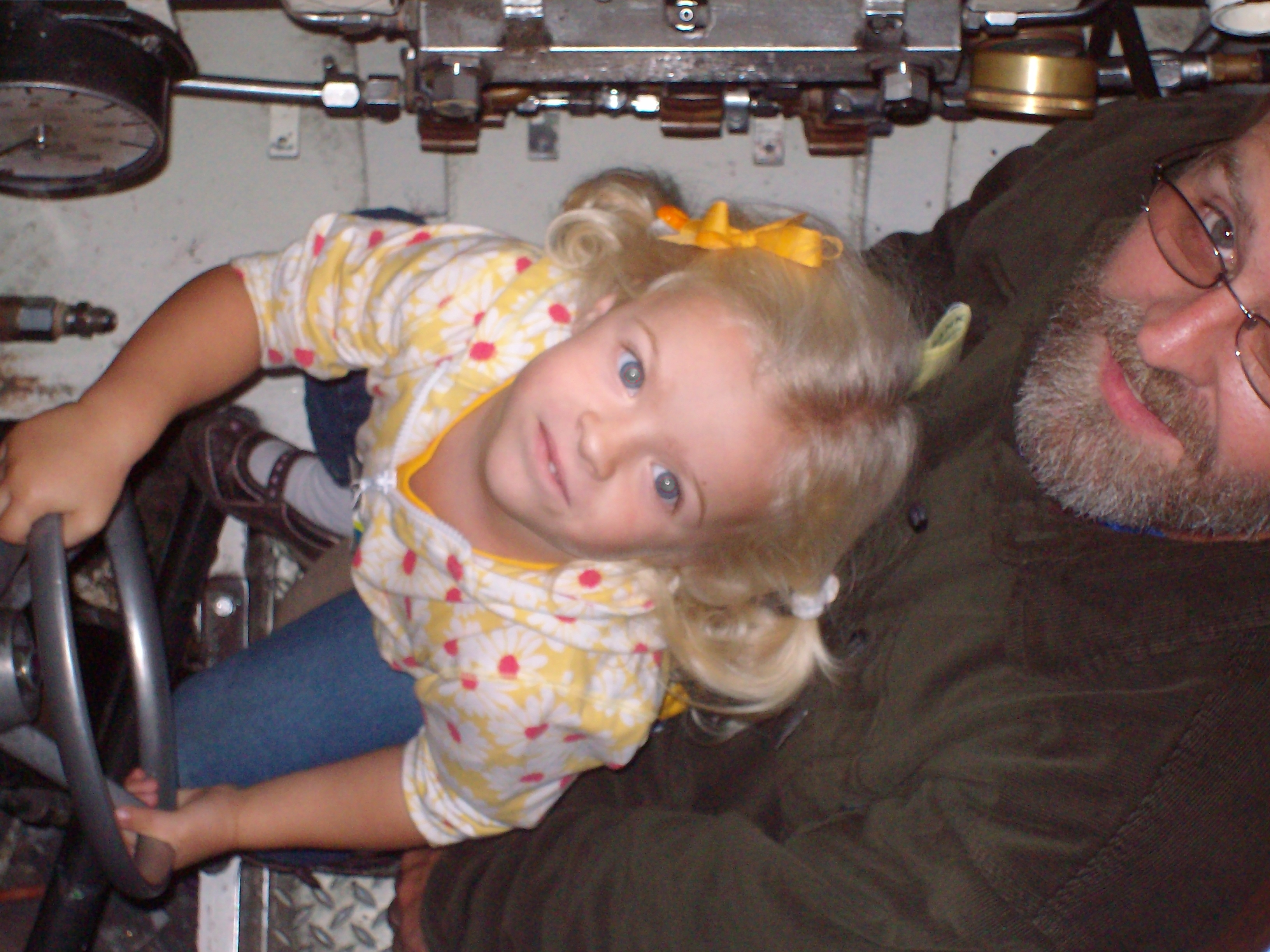
All of this research on small submarines got me to thinking about photos of my daughter and me in small submarines. When she said she wanted to be a submariner when she got bigger that made me worry (she still says this).

Elizabeth & Joe Combs in an Office of Naval Research (O.N.R.) submarine, April 2008.

Then she said she didn’t want to be in the big black submarines like papa she wants to be in the small research submarines. Now I’m breathing again. HaHaHa

I hope you enjoy my article on our other small submarine, Dr. E. Lee Spence’s Hunley. This week’s article will be published tonight at midnight New York time.

The last article in the Hunley series will be next weekend, Spence VS Cussler: Who Found the Hunley?

Comments Off on Speaking of Small Submarines

Filed under family, New, ships, submarines

The Art Lesson


: Or how anyone can draw a sailing ship in 30 seconds or less

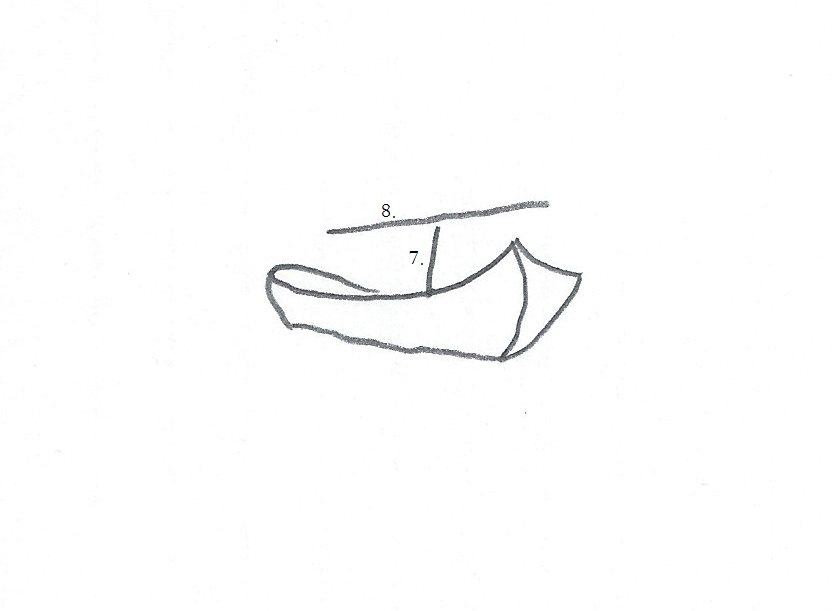
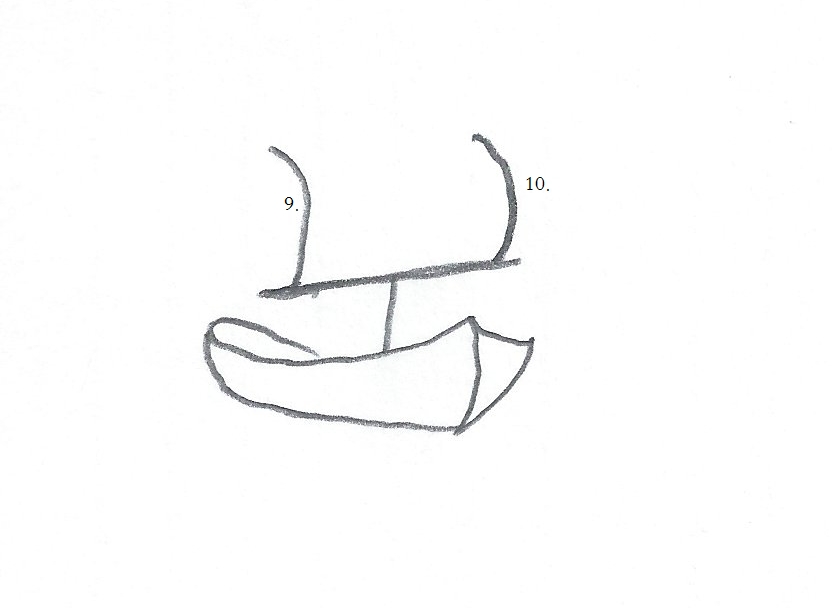
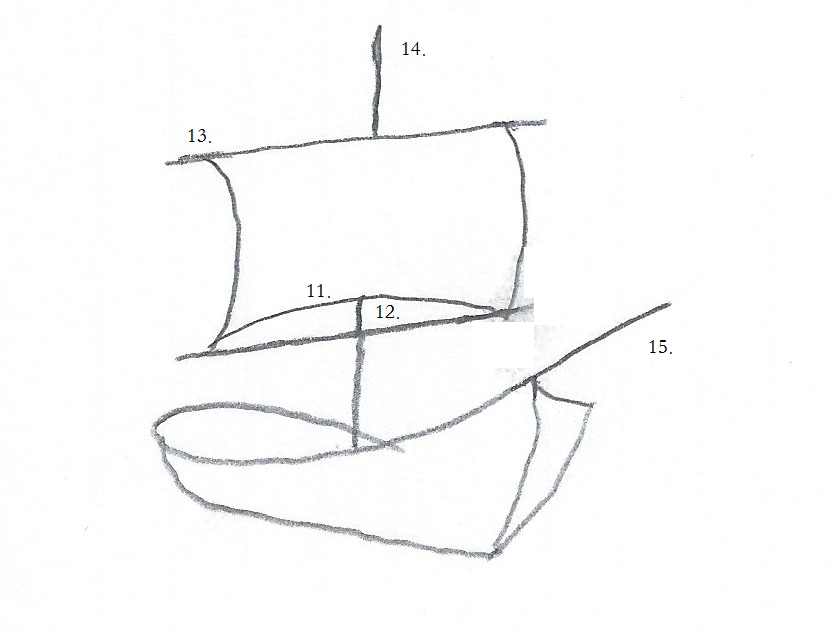
As I promised here is how John Alexander taught me (when I was not much older than Elizabeth) to draw a sailing ship. There are fifteen steps, and your first ship will take a little longer to draw than thirty seconds. But, after you draw a couple, you will probably be able to draw several ships in thirty seconds.

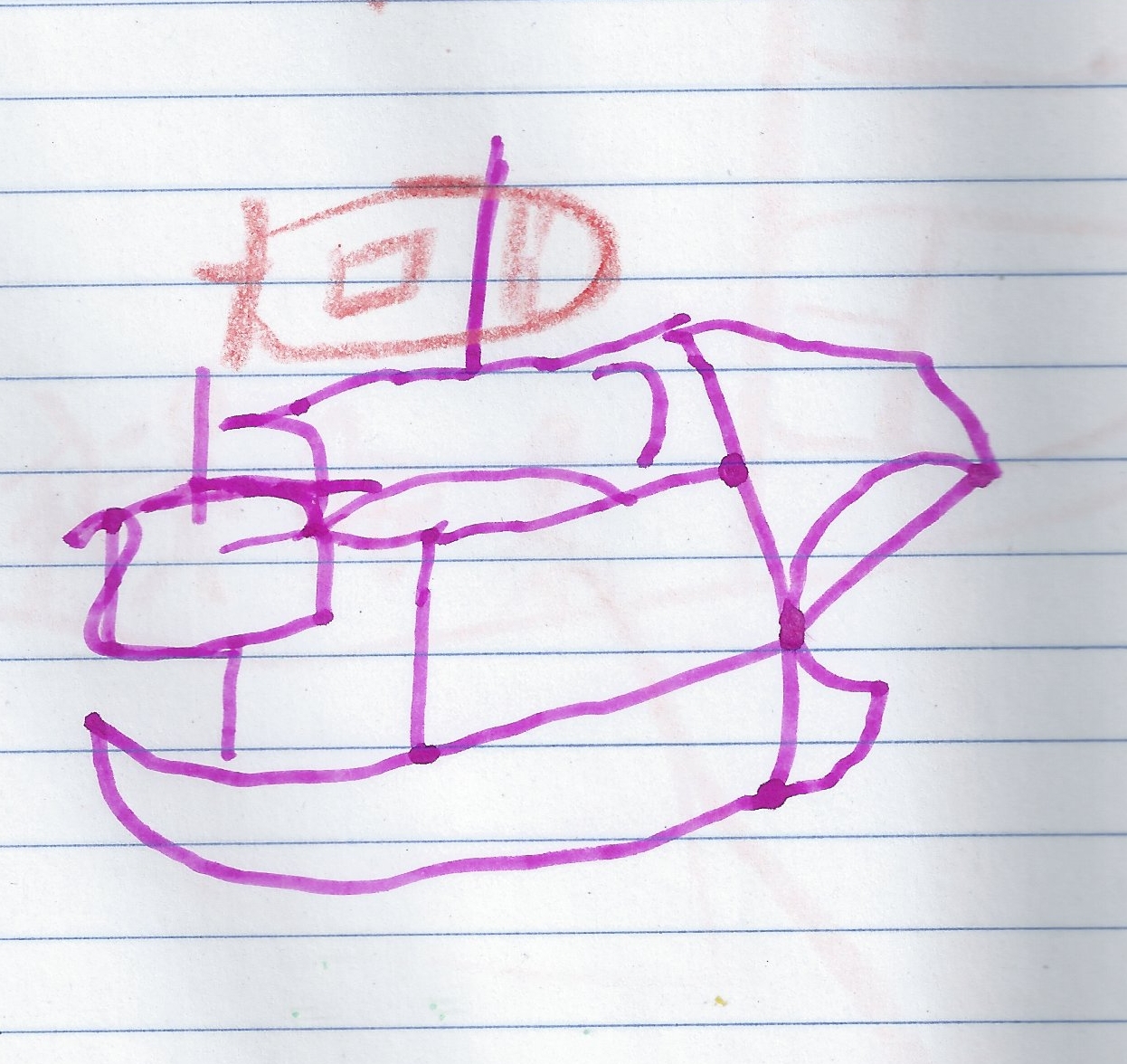
Elizabeth’s first sailing ship, drawn just like John Alexander taught me when I was not too much older than her. (Elizabeth added the flag on her own).

First, let’s see where we are going. Above is Elizabeth’s first drawing of a sailing ship. Your sailing ship will look similar to her’s.

Now that we know where we are going, we can start. Each step is numbered in the drawing, draw them in order and you will be fine.

steps 1, 2, & 3

Step 1, we are going to draw the bow. The bow is the front of the ship and points in the direction the ship is going. Steps 2 & 3 are the left (port) side of the ship. In the drawing you can just see a little of the port side of the ship.

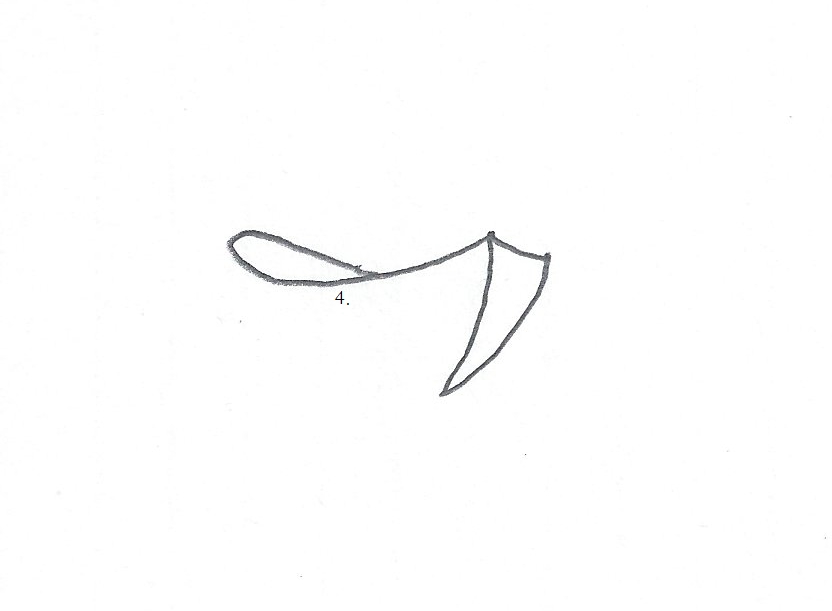
step 4

Step 4 looks complicated, but it is not. It may be easier for you turn your sheet of paper sideways and draw a flat letter “P”. The line is the top of the starboard (right) side of the ship. The inside of the loop is the deck at the stern (back) of the ship. You are giving your sailors a firm place to plant their feet.

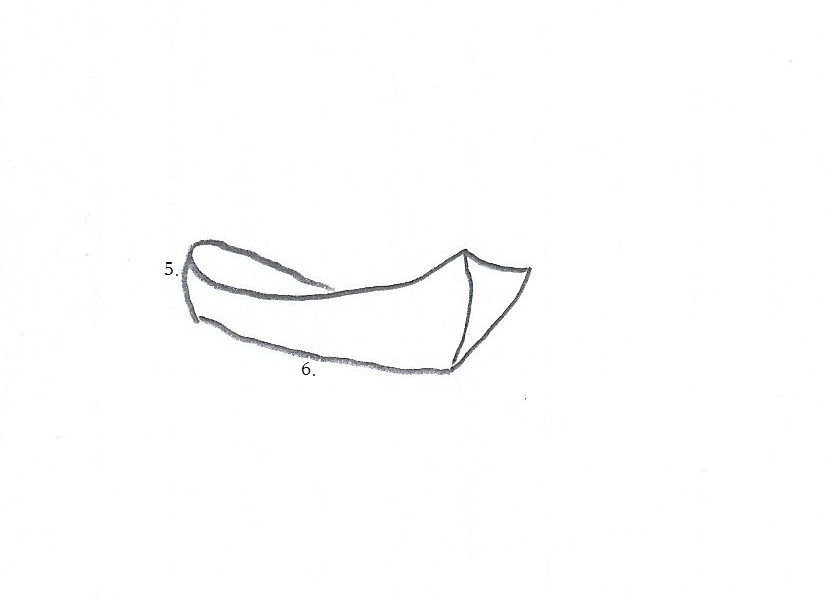
steps 5 & 6

Step 5 is the stern (back) of the ship and step 6 is the rest of the starboard (right) side of the ship. Your sailing ship is now starting to look like a ship. You have given your ship its form.

steps 7 & 8

Now you need to get your ship moving. Wind moves sailing ships, and sails harness that wind. Your ship needs sails. But, before you draw your sails for power, you need a strong foundation to support those sails. Step 7 is part of the mast. Some masts on some ships go more than 150 feet into the air. The mast supports the sails and the yardarms. Step 8 is a yardarm. The yardarm is the cross-piece that spreads the sails, it also supports the sails and keeps them in place. You now have the foundation and support to control your power.

steps 9 & 10

Steps 9 and 10 define the sails. They are curved because of the wind, your ship is moving. But, most people do not know the wind can pull a ship as well as push a ship. When the wind is coming from behind a ship, it pushes on the back of the sails and moves the ship forward. However, if that were the only way to move a sailing ship, ships would have a hard time getting to their destination. Sometimes the wind is blowing against the ship. So what do you do? You steer a course a little to the left or right of the wind. As the wind passes the front of the sail, it creates a low pressure area in front of the sail, like the top of an airplane wing. This low-pressure area pulls the ship forward. Now you can steer your ship to any destination you want.

steps 11 through 15

Step 11 is the bottom of the sail curved by the force of the wind. Steps 12 and 14 are the rest of your mast. Step 13 is the yardarm where the top of your sail is attached to the mast. Step 15 is the bow sprint. On great lakes ships it is not called a bow sprint, it is called a steering pole. There you have it, your sailing ship.

A refresher before you go.

First, you get an image of where you want to go.

Then, you decide your direction.

Next, you need a firm foundation to plant your feet on.

Then, you create the form of your project.

Now, you need to power your project, and to control that power.

Sometimes forces work against you, but do not despair, adjust your course and steer toward your destination. You will prevail.

You see? You have been drawing ships your whole life. Now you can do it with paper and pencil too.

Now go out a teach someone else how to draw a sailing ship. Let’s see just how many more people can learn from John Alexander.

Thank You Mr. Alexander!

1 Comment

Filed under Cup-O-Joe, family, New, ships

The Lesson


The Lesson.

What was it like growing up in a small town in the deep South in the 60’s & 70’s? Well, this is what it was like for me.

2 Comments

Filed under Cup-O-Joe, family, fishing, New, notes