Tag Archives: joeccombs2nd.com

2012 in review — Thank You ! To all of my readers!


I don’t normally post this kind of information. I view this site as a Sunday morning conversation between us, and stats cannot possibly tell THAT story. So if you feel the same, don’t bother with this, but if you are curious WordPress did a really good job with this report. I want to take this opportunity to say Thank You to ALL of you. I hope in 2013 you follow your dreams and have a GREAT year.

The WordPress.com stats helper monkeys prepared a 2012 annual report for this blog.

Here’s an excerpt:

4,329 films were submitted to the 2012 Cannes Film Festival. This blog had 26,000 views in 2012. If each view were a film, this blog would power 6 Film Festivals

Click here to see the complete report.

3 Comments

Filed under Cup-O-Joe, history, New, notes

Our 2012 Awards


Reader's Choice Best Guest Author Award

No not the ones we have received the one we are giving. This is our first complete year and it has exceeded our goals. That would not be possible if not for the authors of our articles, we don’t just mean Joe either. To show our appreciation we will be presenting one guest author our “Readers Choice Best Guest Author 2012 Award.” (This is the first annual)

The Rules (everyone has them):

  1. Joe is not eligible.
  2. Authors of re-blogged articles are not eligible for the re-blogged articles (but are for any guest articles they wrote for us).
  3. Every author with one guest article for us is automatically nominated for that article.
  4. If an author has two or more guest articles with us, then Joe picks one article for the nomination.
  5. This is an annual award given to one and only one author. There is no other way to be nominated or to win.
  6. The winner is chosen by a vote of our readers. Everyone can vote.
  7. The winner, as chosen by our readers, will be announced the first Sunday following the end of voting. Readers will be able to vote for one week (midnight friday to midnight friday New York time) and will only be able to vote once.

This years nominees are:

E.Walsh for “Operation Live Well: Promoting Health and Wellness in the Military Community”: (go here to read http://wp.me/p1MLkF-WS )

and

J.G. Burdette for “The Elusive Lady : The Discovery and Exploration of RMS Titanic”: (go here to read http://wp.me/p1MLkF-gw )

If you would like to be eligible for next year’s “Reader’s Choice Best Guest Author” award, contact us with your idea for an article that helps, inspires, encourages, or a new or unique look at something historical.

use a subject line of “Guest Author” and email to:

admjcc2author@mail.com

Señalización de lugar de votación en Californi...

Señalización de lugar de votación en California. 2008. (Photo credit: Wikipedia)

2 Comments

Filed under Cup-O-Joe, history, New

I Believe


I believe, and not just because I have a 7-year-old daughter. I have always believed, even when I was a 40-year-old man who thought I would never have children I believed. Why do I believe? To explain, I need to tell a brief history of Santa Claus, and of course, any history of Santa Claus begins with a brief history of St. Nicholas. My rule on my website is no politics or religion. However, as Saint Nicholas was a Christian Bishop it is part of who he was, and as such, it is part of his story. This article is a brief history of Saint Nicholas / Santa Claus and makes no judgments for or against Christianity in keeping with my rule.

Nicholas was born in present day Turkey to wealthy Greek parents. Orphaned while a small boy he was raised by his uncle Nicholas. Uncle Nicholas was the bishop of Patara. As he grew older, our Nicholas became a priest under his uncle’s tutelage. On his uncle’s death, Father Nicholas became Bishop Nicholas. Religious icons are almost as old as Christianity, and play a part in some of the legends of Saint Nicholas. In the early days of Christianity the majority of people could not read or write, (priests were the exception to this). Icons are religious images created according to strict rules. Each saint’s icon has specific items in the image that identify that particular saint. In the case of Saint Nicholas, he holds a book in his left hand and in his right hand, he holds three purses, or three gold coins, or three balls of gold.

The book is a gospel. Saint Nicholas is considered a defender of the faith. At the Council of Nicaea, the Roman Emperor called all the leaders of Christianity together in an attempt to “standardize” the religion. There were two main groups within Christianity. The first and smaller group (called Gnostics) believed Jesus was a prophet who was then killed, executed, and buried. They also believed that the way to heaven was through a secret knowledge (Gnosticism). By learning this secret knowledge, people earned their way into heaven. They were the authors of the Gnostic gospels, often referred to as the “forbidden books of the bible”. The second group (which Nicholas was a member of) believed that Jesus was the son of God and rose from the dead, they also believed that no one could earn their way into heaven. This second group believed that people went to heaven only through the grace of God, because of the sacrifice of Jesus on the cross.

By now you are asking “Ok, but what does all of this have to do with Saint Nicholas?” When the leader of the Gnostics stood before the Emperor making the case for his side at the Council of Nicaea, Bishop Nicholas calmly walked to the front of the gathering and slapped the Gnostic leader across the mouth, while he was addressing the Emperor. The other Gnostics demanded that Bishop Nicholas immediately be put to death for striking a person in the presence of the Emperor (this was a Roman law). Bishop Nicholas was well liked by all who knew him and he was generous to the poor. Also, Emperor Constantine is believed to have favored Nicholas’ side over the Gnostics. The Emperor decided that Bishop Nicholas would be stripped of all his Bishop’s attire and symbols of his rank, and placed in a cell for the night while the Emperor decided his fate.

In the morning, when the guards went to get Bishop Nicholas, his cell door was opened, all of his Bishop’s vestments were returned, and he was kneeling in prayer. Nicholas’ supporters claimed that Jesus had freed him and the Virgin Mary had returned all of his vestments to him. Emperor Constantine declared that was enough for him he would not go against Jesus and Mary. He restored Nicholas as a bishop. After this, all traces of Gnosticism were removed from the accepted cannon and Gnosticism was outlawed. It is for this reason that icons of Nicholas show him with a book (a gospel) in his right hand.

The three pieces of gold in his other hand are a testament to his generosity to the poor. There was a man who had three daughters, but no dowry. At this time, a woman without a dowry could not marry and would most likely become a prostitute because this would be the only way she would be able to support herself. Bishop Nicholas on hearing of this man and his three daughters provided the dowry for each of the daughters. When each daughter became of age, he secretly made his way to the house at night. He then left a bag of gold coins for the young woman’s dowry. When it was the youngest daughter’s turn, her father decided to hide and see who the anonymous benefactor was. Bishop Nicholas wanted to keep his identity secret, and so tossed the bag of coins down the chimney where they fell in a pair of stockings the daughter had hung over the fireplace to dry.

A myth surrounding Saint Nicholas has him bringing three boys back to life after a butcher had killed them. This story most probably comes from illiterate people mistaking the three gold balls in his hand (in the icon) for three heads. The three gold balls have also been mistaken for three oranges. This is why in Holland it is believed that Sinterklaas comes from Spain. In the time before North America was explored, oranges were imported from Spain to Holland.

Bishop Nicholas spent the rest of his life in service to the church and spent the fortune he inherited from his parents helping the poor, particularly children. During his life, children were considered of no value, and a parent or guardian could do with children as he liked (woman ranked above only children at this time). Bishop Nicholas died on 6 December 343. Traditionally a saint’s feast day is the anniversary of his/her death (the day they enter heaven). In celebration of the feast day of Saint Nicholas gifts are given to children to honor Saint Nicholas. Bishop Nicholas’ reputation as a giver of gifts is the source for our Santa Claus or Father Christmas.

Father Christmas goes back more than 500 years in England, over time he merged with Saint Nicholas into the figure we know today as Santa Claus. The first use of the name Santa Claus goes back to the American colonies in 1773. Santa Claus is also mentioned in Washington Irving’s 1809 History of New York. Santa Claus is an Americanization of the Dutch name for Saint Nicholas, Sinterklaas.

Santa Claus as we know him today has evolved over the last 200 year. In 1821, in the poem Santeclaus he was described as an old man on a reindeer sleigh. Next came the poem A Visit from Saint Nicholas (known today as Twas the Night Before Christmas or The Night Before Christmas). This poem was published anonymously on 23 December 1823. Today it is attributed to Clement Clarke Moore, though some claim it was written by Henry Livingston Jr. (books and articles have been written on which of these men actually wrote the poem).

A Visit from Saint Nicholas gave us much of what we know today about Santa Claus, but that is for next week.

Nederlands: Sinterklaas tijdens het Het Feest ...

Nederlands: Sinterklaas tijdens het Het Feest van Sinterklaas (Photo credit: Wikipedia)

1 Comment

Filed under Cup-O-Joe, family, history, New

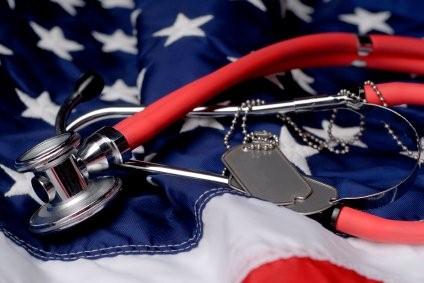
Operation Live Well: Promoting Health and Wellness in the Military Community


Image

A healthy military is a strong and productive military, and the United States Department of Defense (DOD) is committed to the wellbeing of the entire military community. In addition to comprehensive healthcare services for those in uniform, the federal Military Health System has commenced a national campaign to promote healthy living. Called Operation Live Well, it focuses on injury and disease prevention in every aspect of military life.

Operation Live Well
Operation Live Well supports military families through numerous resources and healthy living initiatives. Various government policies and programs help military members and their loved ones make important choices that impact their health and wellbeing. The DOD encourages physical and psychological fitness through education and special programs. It also understands the importance of social interactions and spiritual pursuits.

Military Health Priorities
Emotional health, mental fitness and physical conditioning are directly related. The United States government encourages military families to eat healthy and exercise daily for health, strength and stress reduction. The DOD also encourages a tobacco-free lifestyle to prevent chronic illness and premature death. These basic priorities are essential for a strong, protected force as well as a healthy, resilient military community.

The government’s national prevention strategy seeks to avoid injury and illness due to any cause or situation that a service member may encounter. Natural disasters, occupational hazards, military exposures, traumatic brain injury and outdoor recreation are some of the specialized focus areas.

Disaster Preparedness
Natural disasters can happen at any time. Several agencies within and outside the federal government have resources that help military families prepare for emergency situations. Disaster preparedness is the best way to protect military families in emergency situations.

Military Exposures
Environmental and occupational safety measures are essential for preventing illness due to military exposures. Mesothelioma, a fatal cancer caused by asbestos exposure, is a potential risk for military personnel who work in old buildings or shipyards. Many veterans have long-term health problems due to radiation, warfare agents and chemical exposures. The DOD and the Department of Veteran Affairs (VA) can help service members prevent or manage the health risks associated with these elements.

Traumatic Brain Injury
Traumatic brain injury (TBI) awareness is a top priority of the federal government. The DOD has made significant strides in education, prevention and healthcare delivery to military members with TBI challenges, including post-traumatic stress disorder (PTSD). The DOD continues to research and provide resources for those who suffer from these debilitating conditions.

Outdoor Safety
Even outdoor recreation can pose health risks to military members and their families. From the prevention of heat exhaustion to protection during high-risk activities, outdoor safety is a major concern during the summer months. Fluid replacement, sunscreen and protective gear are some of the preventative measures for summertime health and wellbeing.

Operation Live Well is committed to healthy living for all people in the military community. To learn more about this national campaign, visit the Military Health System website here. The Military Health System is an agency of the United States Department of Defense.


1 Comment

Filed under New

A Time for Giving Thanks


It is not often that you have the opportunity to meet a rookie officer his first day on the job. On 31 August this year, I met Officer Nist and Marysville’s newest police officer, Officer Bear. The two were quite a contrast. Officer David Nist has always wanted to be a police officer. David’s mother remembers him playing police officer as a small boy, and drawing pictures of police officers. Officer Bear’s mother and father both served as police officers with distinction. Officer Nist, the consummate professional, polite, friendly, disciplined. During the interview both officers completely aware of their surroundings at all times. Officer Bear watched his partner constantly, following the lead of his more experienced partner; though Officer Bear’s youthfulness was apparent.

Originally, Officer Bear was intended as a replacement for officer Khan. Officer Khan a six-year veteran of the Marysville police department, and Officer Nist’s previous partner, was injured during training. The original prognosis was not good. The citizens of Marysville raised money for Khan’s medical bills, but Khan was still partially paralyzed. Khan would have to be euthanized. Officer Khan is a Belgian Malinois. How David Nist became the Marysville police department’s K-9 officer is an interesting story in its own.

In 1992/93 David Nist was a star athlete at college in Tiffin, Ohio. A wide receiver, and one of the fastest men on the team, David was challenged to race the Tiffin police department’s police dog to the end zone of the teams football field. The police dog lined up on the 50 yard-line, and David lined up on the 30 yard-line. David reached the end zone first because, as he tells the story, he was running scared. When the police dog caught David, it bit him and, “… ever since then I knew I wanted to be a K-9 officer”, he said laughing.

David graduated and became a Marysville police officer in 1996. After his one-year probation, the police chief asked David, “Would you like to start a k-9 unit?” His dream of more than four years was becoming a reality. David created the Marysville K-9 unit, writing all the procedures and policies; and seeking local support from the citizens, citizens groups, and employers in the area. Honda of America Manufacturing and the Eagles donated the money to purchase Marysville’s first police dog Indy. In 2005, Indy retired from active service.

It was at this time that two other dogs and one trainer needed to be trained for area law enforcement. David and his fellow officer trained the three dogs and received their certification as Master Police Dog Trainers; this would prove valuable for the Marysville police department and the people of Marysville. The training is a time consuming four and one half months. The dogs are trained every day during this time; the dogs don’t understand the concept of Sunday’s being a day of rest.

For the next six years, officers Khan and Nist were partners, until Khan’s injury. Khan’s recovery was quite miraculous, and unexpected by all, including the veterinarians. When David went to pick up Khan, the veterinarians surprised him with a financial donation of their own. The story of Khan’s hospital stay is both miraculous and hilarious; I promise to write a future article with the rest of the interview.

Khan’s first training session back on duty (the area K-9 units all train together monthly), one of the other K-9 dogs had puppies. David looked the puppies over and secretly chose one, then asked his fellow K-9 handlers for their opinions. It was unanimous Bear was the pick of the litter. Normally, a fully trained police dog costs about $14,000. With David’s certification as a Master Police Dog Trainer, he has undertaken the training of Bear, saving Marysville more than $10,000. Additionally, with Officer Khan back on duty, there is no down time for the K-9 unit while Officer Bear under goes his training.

How did David come up with the name Bear? He didn’t. A local 8-year-old girl took money out of her piggy bank to make a get-well card for Khan, so David let her name the new dog. What she did not know when she picked the name Bear, was that Bear was the name of a K-9 dog from another police department that Khan and David knew through the monthly area K-9 training sessions. Bear, the first Bear, and his handler (Bobby) both recently passed away. The naming of the new Bear was an unintended and fitting tribute to a K-9 team who faithfully serviced the citizens of their community for so many years.

Just a dog? No, police dogs are not “just a dog.” Handler and dog are a team, just as all law enforcement officers are a team with their partners. Learning each other’s strengths and weaknesses, handler and dog learn to read each other as few teams seldom do. The handler knows that in any situation, he/she can depend on their dog and the dog knows it can depend on its handler. They have each other’s back in every situation. The loss of a dog or handler, is as hard as the loss of a family member, and is felt as strongly by the other dogs as it is by the other handlers. A police dog is every bit as much of a police officer as its handler, and goes through the same tragedies and triumphs as its partner.

One week after my interview with Bear and David, I saw Khan and David on the side of the road working a traffic stop (Bear in the back of the K-9 patrol car). I felt a sense of comfort seeing Khan and David, serving and protecting the people of their community. During this Thanksgiving Holiday season, I am thankful for David Nist, Khan, Bear, and all the K-9 teams that keep us safe. As I write this, a K-9 unit somewhere is placing their lives at risk to protect us. While you are reading this, another K-9 unit somewhere is placing their lives at risk to protect us. At this holiday season I give thanks for our K-9 teams and pray for their protection.

Thank you David, Khan, and Bear, you reflect great credit upon yourselves, the Marysville Police Department, and the citizens of your community.
Comments Off on A Time for Giving Thanks

Filed under Cup-O-Joe, New