“WayBack Wednesday” A Look At One Of Your Favorites: March 9, 2016


Clive Cussler’s Hunley


Clive Eric Cussler (Photo credit: /Stef_)

Clive Eric Cussler
(Photo credit: /Stef_)


Comments Off on “WayBack Wednesday” A Look At One Of Your Favorites: March 9, 2016

Filed under New

Wilhelm Bauer and the Sea Devil


Wilhelm Bauer United States Public Domain

Wilhelm Bauer
United States Public Domain

Wilhelm Bauer – never heard of him huh? This man “…had more time sitting on the can at test depth than …” oops, never mind – an old submarine expression often spoken with feigned disgust at new kids onboard. But, as I was saying, by 1860 Wilhelm Bauer had more dives on a submarine than everyone. He may have even had more dives on a submarine until the 20th century, and if someone in the 1800s did get in more dives than Wilhelm, it would have been John Holland or Simon Lake. I’ll get to John & Simon later.

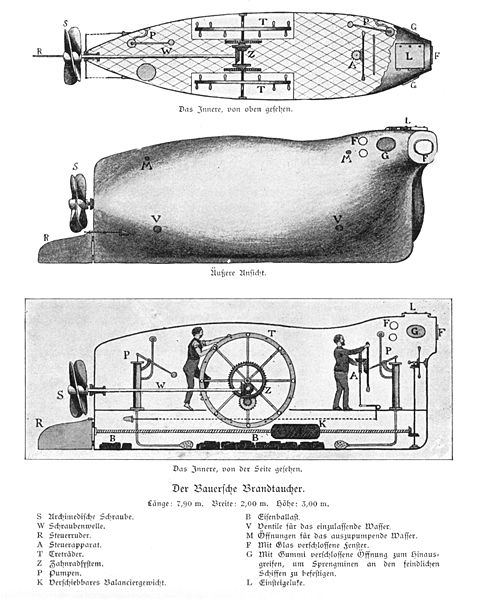
Wilhelm was German, but he is not the father of German submarines. He was, however a pioneer in the field of submarine and construction. The impetuous for Wilhelm’s first submarine was the German Danish War of 1848 to 1851. He named his creation Brandtaucher (Incendiary Diver). An often used technique for breaking blockades was to load a ship with explosives (or to light it on fire) and then set it adrift with the currents to be sent into the blockading ships wreaking havoc on the enemy fleet. These ships were known as incendiary ships. Wilhelm’s idea was for his submarine to attach an explosive to the underside of Danish blockading ships and break the blockade through their destruction.

The Brandtaucher was about 28 feet long and 35 tons. It was powered by two sailors on a treadmill. The third crew member operated the submarine. The first public demonstration (1 Feb 1851) almost ended in disaster. The submarine began to leak and settled on the bottom of Kiel harbor.  For six hours Bauer and his two sailors waited for enough water to leak into the submarine to equalize the pressure so they could open the hatch. In 1887, the submarine was raised and is now on display at the Museum of Military History Dresden, Germany.

Immediately Bauer began to plan his next submarine, but the government of Schleswig-Holstein would not fund another submarine. He tried to get the support of other European countries and finally in 1855 he signed a contract to build his submarine for Russia. This submarine, named Seeteufel (Sea Devil), was twice as large and designed with a lockout chamber and had a crew of twelve. This submarine was a very good design. On the 134th dive the submarine became stuck in the sand. The crew managed to raise the hatch above the water and escape. But, the submarine sank back down to the sea floor.

This was Bauer’s last submarine. He realized he would not be able to get the support he needed from another country and turned to his other interests.

Drawing of the Brandtaucher - 1851 United States Public Domain

Drawing of the Brandtaucher – 1851
United States Public Domain

Comments Off on Wilhelm Bauer and the Sea Devil

Filed under New

“WayBack Wednesday” A Look At One Of Your Favorite Posts: March 2, 2015


Dr. E. Lee Spence’s Hunley


Dr. E. Lee Spence, VP & owner, International Diving Institute (Photo credit: Wikipedia)

Dr. E. Lee Spence, VP & owner, International Diving Institute (Photo credit: Wikipedia)

Comments Off on “WayBack Wednesday” A Look At One Of Your Favorite Posts: March 2, 2015

Filed under New

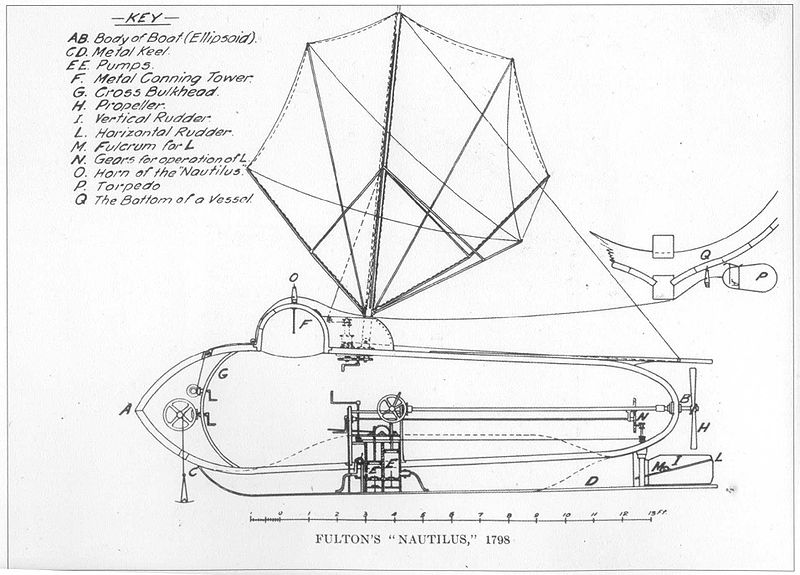
The Original Submarine Nautilus


A 19th century drawing of the Nautilus.

A 19th century drawing of the Nautilus.

After the loss of the American Revolutionary War submarine in 1776 the Americans did not produce another memorable submarine until the American Civil War. But there were still men around the world designing and building submarines, including some men in the United States. However, only a handful of the submarine builders could interest any government in their work.

One of the few who did was Robert Fulton, American inventor. Fulton designed and built the first commercially successful steamboat, the Clermont, which provided passenger service between Albany and New York City. Twenty years after the Turtle, Fulton designed a submarine. In 1800, he was in France trying to interest the French government in his submarine for use against the British. The British and French were at war with each other again.

The Nautilus was about 21 feet long with a beam of about 6 feet. It was made of an iron frame with a copper skin. The iron keel was hollow to take on water ballast so the Nautilus could dive. It had a four-bladed propeller hand cranked by two men and a sail for surfaced propulsion. The third man navigated the submarine and attached the bomb to the underside of the target ship.

The Directory of the French First Republic was uninterested in Fulton’s plans, but the Minister of Marine authorized the construction. Fulton obtained an interview with Napoleon, but could not gain his support. Next, he put on a demonstration where the Nautilus destroyed a 40 foot sloop. The panel from the Minister of Marine was impressed and recommended two submarines be built. In the end Napoleon was unconvinced and the French navy considered the submarine a suicide weapon.

The British knew of the failed mission to France and paid Fulton ₤800 to build a submarine for Britain. If Fulton was building a submarine for the British he would be unable to build one for France – if they changed their mind. The British ignored Fulton while he was in Britain and he returned to the United States in frustration. Thirty years later another submarine designer and builder named his first submarine after the Nautilus.

Even as Fulton faced failure, around the world men continued their work. They dreamed, planned, and researched, and then they would build. They would study any information they could find on previous submarines, sometimes incorporating design features or improving a design feature from a previous submarine. These men were stepping into a field where much was still unknown. Sometimes these pioneers paid the ultimate price to push the envelope in their search for a viable submarine, and sometimes they only went bankrupt. A few though, would see their creations purchase by governments and used (though normally unsuccessfully).
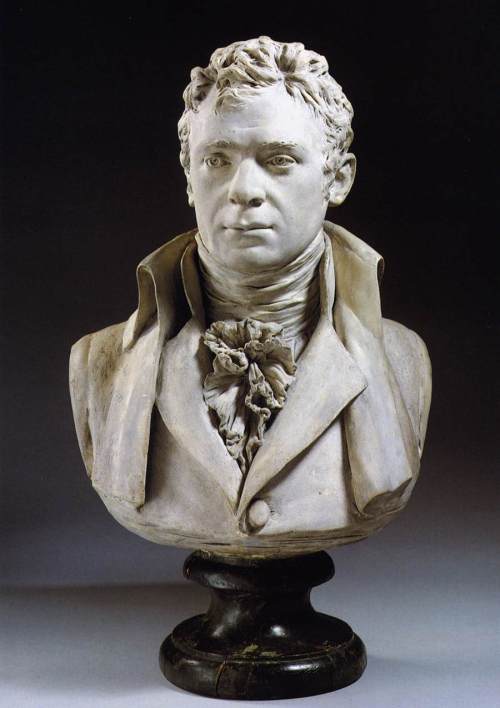
A bust of Robert Fulton by Jean-Antoine Houdon, 1803.

A bust of Robert Fulton by Jean-Antoine Houdon, 1803.

Comments Off on The Original Submarine Nautilus

Filed under New

“WayBack Wednesday” A Look Back at One of Your Favorites: Feb 24, 2016


The Hunley Blue Signal Light

The H.L. Hunley: Its life and controversies

The H.L. Hunley:
Its life and controversies

Comments Off on “WayBack Wednesday” A Look Back at One of Your Favorites: Feb 24, 2016

Filed under New