Author Archives: combs2jc

combs2jc's avatar

About combs2jc

I am a dad first. I am also a writer, artist, submarine vet and adventurous. Most of my writing is non-fiction. I concentrate on memior and history. I also have an annual Christmas book I put out that is free, "Christmas Patrol". "Christmas Patrol" gives vetrans (multiple countries and services) a chance to encourage those men and women currently serving their country during the holidays. My readers have been asking for a website and here it is. Feel free to write, I read everything. Thank You!

Lost Ships of the 1715 Spanish Treasure Fleet (Lost Treasures Part 4)


"8 escudos Lima 1710" by Augi Garcia - Photo Augi Garcia for Daniel Frank Sediwck, LLC Treasure Auction #4. Licensed under Creative Commons Attribution-Share Alike 3.0 via Wikimedia Commons - http://commons.wikimedia.org/wiki/File:8_escudos_Lima_1710.jpg#mediaviewer/File:8_escudos_Lima_1710.jpg.

“8 escudos Lima 1710” by Augi Garcia – Photo Augi Garcia for Daniel Frank Sediwck, LLC Treasure Auction #4. Licensed under Creative Commons Attribution-Share Alike 3.0 via Wikimedia Commons –

This is a story of lost treasure that harkens back to my childhood. The lost Spanish treasure fleet of 1715. The most amazing thing about this treasure fleet is that about half of the ships are still missing. But, I am getting ahead of myself.

The year is 1715, and all of Europe has been at war for 23 of the last 26 years. The last of the two wars The War of Spanish Succession began in 1701, and ended with the Peace of Utrecht in 1713. News traveled slowly in the eighteenth century and it was 1714 before the last of the hostilities finally ended.

During the wars it was very dangerous for the Spanish treasure fleets to attempt to sail back to Spain. At war against more than a half-dozen European powers with France and Bavaria as its only allies, Spain faced quite literally a sea of hostile ships determined to capture the Spanish treasure fleets. Under these conditions, even the lowly cabin boy could become a very rich man with the capture of a Spanish treasure ship.
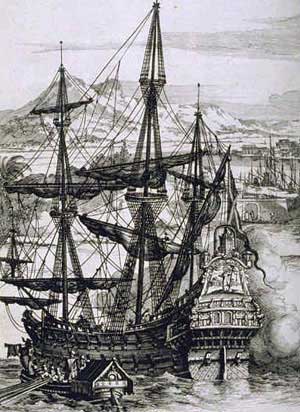
"Spanish Galleon". Licensed under Public domain via Wikimedia Commons -

“Spanish Galleon”. Licensed under Public domain via Wikimedia Commons –

Faced with these conditions, Spain kept the treasure fleets in the Americas until the end of the war. The 1715 fleet was the first fleet of treasure ships to sail for Spain since the end of the war. During more than 300 years of treasure fleet sailings from the Americas to Spain, the 1715 fleet was the single largest loss of treasure for the Spanish Crown and it happened at a time when Spain was desperate for treasure. During the war the English captured or sank a great many of Spain’s treasure ships.

The two Spanish Fleets, the Terra Firme and Nova Espana, joined in Havana to take on supplies before sailing homeward as a combined fleet. When the fleet left Havana there were eleven Spanish ships and one French ship, the Griffon, for a total of twelve. Some people believe there were actually twelve Spanish ships for a total of thirteen ships in the fleet. But, this is due more to a misunderstanding of the Spanish records than any actual evidence of a thirteenth ship.

The Spanish fleets had been in the Americas for two years waiting to sail for Spain. During that time a very large treasure was accumulated, some estimates have the registered cargo valued at over 7,000,000 pieces of eight (well over $100 million USD in today’s value). No one knows how much unregistered treasure was aboard the ships and it could have easily been as much or more than the registered treasure. Once the ships were made ready for the homeward journey, they sailed from Havana harbor on July 24, 1715. The ships sailed past the Florida Keyes and up the Florida Straits. Once sighting Cape Canaveral the fleet would turn towards Bermuda. Once Bermuda was sighted the fleet would sail for the Azores, and then onto Spain. This was the route of the Spanish ships for more than 300 years.

As the fleet sailed up the Florida straits the Spanish ships hugged the Florida coast, yet far enough out to sea to take advantage of the northward flowing Gulf Stream. Captain Antoine Dar of the Griffon was wearier of sailing close to the Florida East Coast; he kept the Griffon further out to sea and east of the Spanish ships.

The weather was fine for the first five days. However, on the 29th of July the weather changed. The ocean became smooth with long low swells coming from the southeast, the air was heavy with moisture, and a gentle breeze caressed the north bound fleet. The experienced sailors within the fleet recognized this weather as the sign of an approaching hurricane. This would have been a good time for the Spanish ships to join the Griffon further off the Florida coast. But, the Spanish would wait until it was too late to make this move.

As the fleet plowed onward towards Cape Canaveral the winds continued to pick up steadily. By the afternoon of July 30th Captain General Ubilla ordered his fleet to change course to head directly into the wind. It was already too late. The fleet was maintaining its distance from the dangerous coast with its reefs and rocks, right up until the hurricane caught up with them.

At about 4 am on the morning of July 31, the hurricane struck the fleet with all its fury, driving the ships ashore. The Santisima Trinidad (also known as Urca de Lima) found a cove on the Florida coast. It was in this cove that the ship was driven up on a sandbar. Because of the protection of the cove the Santisima Trinidad was the only ship of the fleet that did not break apart when it wrecked. The food and other supplies on this ship helped to sustain the survivors of the disaster until rescue ships arrived.

Captain Dar’s ship became separated from the Spanish ships during the storm. Unaware of the fate of his companions, Captain Dar sailed onto France. There are some who state that there is no evidence that the Griffon survived and returned to Europe.

The Griffon collected treasure in South America to settle debts owed by Spain to France and to French merchants. So it had a great amount of treasure onboard. However, once the cargo was signed for it was no longer Spanish treasure and did not sail to Spain. The Griffon arrived safely in Le Havre. Those claiming the Griffon did not survive; base this on the records in the Archives of the Indies in Seville, Spain. The Spanish records list the Griffon as being part of the fleet, but do not record the Griffon’s return to Europe. This is because the Griffon did not return to Spain and had no cargo or treasure which was bound for or the property of the Spanish Crown or of Spanish interests. In other words, they paid their debt in South America when they loaded the Griffon, and whatever happened to the Griffon was a French problem not a Spanish problem. The Spanish had no interest in the Griffon. Others on the internet who also continue to claim the Griffon was lost and no evidence supports the ships survival are merely repeating the early research of those who looked in the Archives of the Indies, but did not look in France for evidence of the ships return.

The Spanish immediately set about salvaging the shipwrecks, recovering over 5,000,000 pieces of eights worth of treasure by the end of the year. By the end of 1718, the Spanish authorities reported back to Spain that all of the registered treasure had been recovered.

"17158R" by Augi Garcia - Photo by Augi Garcia for Daniel Frank Sedwick, LLC Auction Treasure #4 Nov. 2008. Licensed under Creative Commons Attribution-Share Alike 3.0 via Wikimedia Commons - http://commons.wikimedia.org/wiki/File:17158R.jpg#mediaviewer/File:17158R.jpg.

“17158R” by Augi Garcia – Photo by Augi Garcia for Daniel Frank Sedwick, LLC Auction Treasure #4 Nov. 2008. Licensed under Creative Commons Attribution-Share Alike 3.0 via Wikimedia Commons

A note about this claim. Many of the items registered onboard the ships was not recovered, however, a treasure equal to the amount registered on the ship manifests was recovered. To avoid paying a 25% tax to the King, great quantities of treasure were smuggled back to Spain aboard the ships. Often the amount of unregistered illegal treasure was as much or more than the registered treasure. There are even recorded instances of ships being caught carrying more than twice as much illegal treasure as registered treasure. In one instance all the ships officers were condemned to ten years at hard labor aboard galley ships as punishment for their part in the smuggling which was discovered aboard their vessel.

For 299 years people have been salvaging treasure from the wrecked 1715 fleet along Florida’s coast, with no end in sight.

The ships wrecked near modern day Vero Beach, Florida. Starting near Sebastian Inlet and going south to Fort Pierce, Florida they are called:

The Cabin Wreck (believe to be the Nuestra de la Regala)

Corrigan’s Wreck (believed to be the Santo Cristode San Roman)

Rio Mar Wreck (believed to be the Nuestra Senora del Carmen)

La Holandesa Wreck (believed to be the Nuestra Senora de La Popa)

Sandy Point Wreck (believed to be the Nuestra Senora del Rosario)

Wedge Wreck (this is the Urca De Lima or Santisima Trinidad)

Colored Beach Wreck, Gold Wreck, or Douglas Beach Wreck (believed to be the Nuestra Senora de las Nieves, which is south of Fort Pierce Inlet)

The missing ships of the 1715 fleet are: the Maria Galante, El Senor San Miguel, El Cievro(Also known as La Galleria) and the Nuestra Senora de la Concepcion.

The El Senor San Miguel and El Cievro are believed to be sunk off of Amelia Island, Florida (Amelia Island is in Nassau County Florida which is situated on the Atlantic Ocean on the Georgia/Florida border).

An urca is a cargo ship and Lima was the Captain of the Santisima Trinidad, so Urca De Lima translates into English as “the cargo ship of Lima.” Sometimes this wreck is listed as urca de Lima in the Spanish records (or cargo ship of Lima) and this is the cause for the misunderstanding as to the number of ships in the fleet.

So, out of eleven Spanish ships in the 1715 fleet seven have been found, two are believed to have been found, and two are somewhere in the Atlantic Ocean (your guess is as good as anyone’s as to where).

We know that the Wedge Wreck is the Urca De Lima or Santisima Trinidad wreck. The description of the wreck and the fact that it was the only shipwreck to survive the hurricane intact substantiates this. The other wrecks are identified based on the treasure which has been found near those locations, but there is no evidence confirming these identifications though they are probably correct.

The modern era of salvage on the 1715 fleet began with Kip Wagner in the late 1950s. An associate of Mel Fisher’s, Kip Wagner was already working the 1715 fleet wrecks when Mel Fisher arrived in Florida in 1963. He had heard that people could find Spanish silver coins on the beach after a storm. Armed with a surplus army metal detector (used in the army for detecting mines) Kip hit the beaches. Not only did he find silver, but he began investigating the find to discover where the silver was coming from. After diligent research Kip discovered the source must be the lost 1715 fleet. He applied for a salvage permit from the State of Florida. Then he organized a company, the Real Eight Company, and sought financial backers to pursue the treasure.

To learn more I recommend the following (Robert Marx is my favorite)

“Florida’s Golden Galleons: The Search for the 1715 Spanish Treasure Fleet” by Robert F Burgess

“Shipwrecks Near Wabasso Beach” by Robert Weller

“The World’s Richest Wrecks: A Wreck Diver’s Guide to Gold and Silver Treasures of the Seas,” by Robert F Marx

“Pieces of Eight: Recovering the Riches of a Lost Spanish Treasure Fleet,” by Kip Wagner

Today the “1715 Fleet – Queen Jewels” has the salvage rights to the 1715 fleet shipwreck sights.

Ever think about going looking for Spanish treasure yourself? Forget all that research and years of searching. Both 1715 Fleet – Queen Jewels and Mel Fisher’s Treasures offer you the chance to search for and find Spanish treasure that has been lost for more than 300 years. I am not affiliated with either group and do not receive anything for my endorsement. But, this is something I intend to do. Here are the addresses for you to find out more about these two programs.

For the 1715 treasure fleet:

www.1715treasurefleet.com

Phone: 513-235-1105, e-mail: 1715treasurefleet@gmail.com

Address 1715 Fleet – Queens Jewels, LLC P.O. Box 781798 Sebastian, Florida 32978

For Mel Fisher’s Treasures:

www.melfisher.com/myadventure/

or contact Kim Fisher, Mel’s son and CEO of “Mel Fisher’s treasures” at kimfisher@mekfisher.com

phone: 305-296-6533

Diving for treasure!

Diving for treasure!

 

Comments Off on Lost Ships of the 1715 Spanish Treasure Fleet (Lost Treasures Part 4)

Filed under New

We Interrupt This weeks Article


I am interrupting this week’s series for our (myself and fellow bloggers) discourse on our governments. As always, we do not take a partisan stance, but point to areas where governments are over reaching their own laws or not meeting the basic responsibilities entrusted to them by the people. First I want to say my sympathies are with the Dutch people. The Netherlands is a nation of 16 million people, so the loss of 193 of their friends, neighbors, and family is of a greater impact than September 11 was to the United States with its population of 330 million people (in other words, a larger PERCENTAGE of the Dutch population was killed on July 17, 2014 than the percentage of Americans on September 11, 2001).

Each nation in the world is different, and the government of each nation in the world is different, reflecting the people which it represents. Different peoples have different priorities, which are neither good nor bad. These priorities are based on the cultural and personal experiences of the citizens. The United States has, in times of crisis, taken a stance or action on issues to make a statement concerning what we judge to be right or wrong actions. The 1980 Olympics is a good example of this. In 1979 the Soviet Union invaded Afghanistan. In 1980 the United States boycotted the Summer Olympics in Moscow to protest the Soviet invasion (in addition to many other actions to protest the Soviet invasion).

Boycotting the Moscow Summer Olympics did not cause the Soviet Union to leave Afghanistan (the Soviets stayed until February of 1989). President Carter knew they would not leave even before he made the decision to boycott Olympics. The decision was not universally popular in the United States among the citizens and the athletes. Some of those athletes missed their last opportunity (in some cases ONLY opportunity) to perform in the Olympics. However, the United States government believed this was an important statement the United States must make in defense of the defenseless.

Now, in 2014, the governments of the world are faced with deciding how to respond to the shooting down of Malaysian Airlines Flight 17. I predict that words will be passed, politicians will take weak ineffectual actions, and then publicly congratulated each other for their “tough stance” with Vladimir Putin. Their backslapping and “high-fiving” will not be for their own benefit, it will be to convince us that their weak and ineffectual actions were not weak and ineffectual.

Some of you will disagree with me. Some of you believe that our governments will send a strong message and ensure this sort of thing never happens again. Some of you may even believe that those responsible will be brought to justice. I respect your opinion, but strongly disagree; let’s look at the economics of the United States, Russia, and the Netherlands.

In the United States, bribery is illegal, even those in the aristocracy of America have had to pay a price for being caught involved in bribery. In Russia bribery is illegal and the penalties in Russia are tougher than in the United States. In Russia, bribery is a way of life; it is how people survive, feed their families, house their families, and pay their bills. Do you need your papers processed by a bureaucrat in Russia? That could be an incredibly long time for the simplest documents. But, with the right gift to the right person you can get you documents in a timely manner. In the Netherlands, bribery is a tax write-off.

Report to the American tax service that you paid a bribe and you could find yourself arrested. Report to the Russian tax service you paid a bribe and that Russian bureaucrat will probably call you a fool and tell you to go away. Report to the Dutch tax service you paid a bribe and they will take it off your taxes. This beautifully illustrates the difference in the three countries over what is perceived as morally right. This is why I say nothing will happen in response to the death of 193 Dutch citizens.

Even if Vladimir Putin found out about the shoot down of MH 17 the same way I did, he is still responsible for the tragedy. The shoot down occurred in a Russian controlled part of the Ukraine, perpetrated by Russian backed insurgents. These insurgents are not just supported by Russia; they have been trained and armed by Russia. So, even if Vladimir Putin did not know the shoot down was going to happen, his actions have caused the tragedy.

The Dutch people have now learned, in the cruelest way possible, they are no longer safe in the 21st century. This is a new way of life to which the Dutch people are going to have to adjust.

The Russian billionaires and millionaires keep their money in Dutch banks, Russian corporations do their banking business in Dutch banks, Russian oil and natural gas is the energy that runs the Netherlands, the government of the Dutch people will not take a tough stance with Russia. Given the choice between commerce and the safety of its own people, commerce wins the day. For hundreds of years commerce has always held veto power over all else in the Netherlands.

Today the Dutch people have to decide if life is to continue “business as usual.” Is commerce more important than your neighbor, wife, husband, father, mother, and friends; is commerce more important than the life of your own children. On July 16, 2014, the answer to that question was yes, but the unstated opinion of the person answering the question was that September 11, 2001 could never happen to the Dutch people. Now that it has happened, if your are Dutch, what do you do?

Though the capitalism of America is often attacked for its greed, it is the socialism of Europe that will turn a blind eye to Russia to protect its commercial ties with Russia.

I believe that each and every life is priceless beyond compare, but I am not a European. This is their decision, and I believe their choice is not the choice I would make for my daughter. If the Dutch people choose commerce over safety, I understand, but respectfully disagree. If the Dutch people choose safety for their neighbors, friends, and family over commerce – they need to speak out and speak out loudly. In the Netherlands commerce has been the first choice for so many centuries that your government will only assume it is the choice today as well – and why wouldn’t they?

No matter what the future holds, I will always support the Dutch people, and my sympathies and prayers are with them in this dark hour.

(next week the lost ships of the 1715 Spanish treasure fleet)

Comments Off on We Interrupt This weeks Article

Filed under New

Well I’m Off Again


Joe C Combs 2nd, enjoying a relaxing moment.

Joe C Combs 2nd, enjoying a relaxing moment.

As most of you know, I spent a couple of months in central California a few months back. Now I’m off for two days at a conference in Pittsburgh. Let’s see if this ‘old dog’ can learn some new tricks!

As always, my articles will go on. This week I’ve postponed my fourth article in the Lost Treasures Series to talk briefly about the loss of flight 17. August 3, 2014, we will be back to the Lost Treasures series with “Lost Ships of the 1715 Spanish Treasure Fleet.”

For almost three hundred years governments, treasure hunters, and pirates have been salvaging treasure from this Spanish treasure fleet on the east coast of Florida, where it met its end at the hands of a hurricane. But in all those years, almost half of the treasure ships from this fleet have never been found. Where are the missing ships? Can they be found? What would they be worth today? AND Can you share in the treasure?

We will find out!

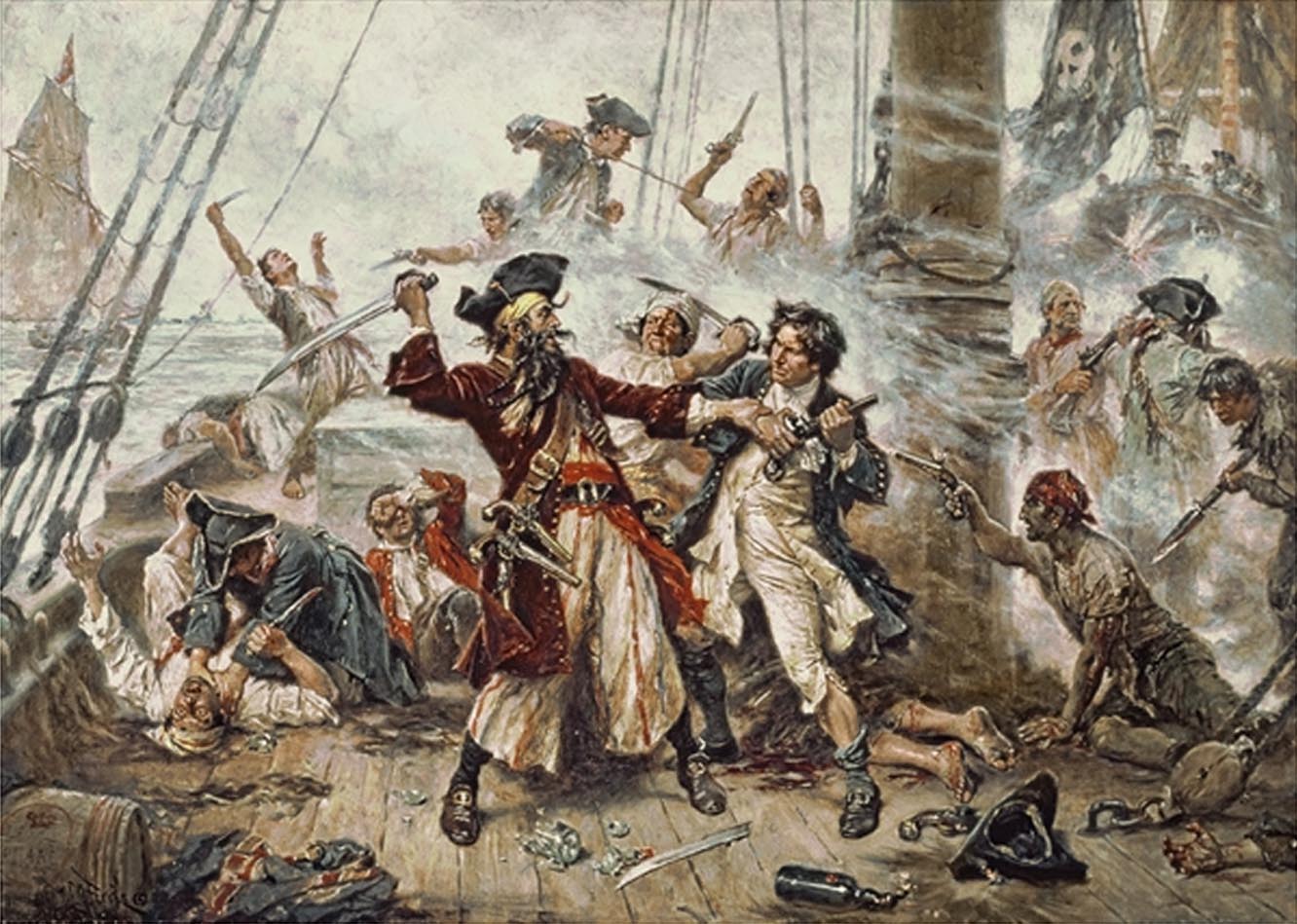
"Capture-of-Blackbeard" by Jean Leon Gerome Ferris -  Licensed under Public domain via Wikimedia Commons -

“Capture-of-Blackbeard” by Jean Leon Gerome Ferris – Licensed under Public domain via Wikimedia Commons –

Comments Off on Well I’m Off Again

Filed under New

The Amber Room (Lost Treasures Part 3)


Photograph of the second Amber Room, now on displayed in the Cathrine Palace, St. Petersburg, Russia. Photo credit, Wikipedia.org, public domain.

Photograph of the second Amber Room, now on displayed in the Catherine Palace, St. Petersburg, Russia.
Photo credit, Wikipedia.org, public domain.

The Amber Room.

What many people do not know about the Amber Room, is that there were actually two Amber Rooms constructed nearly 300 years apart. The first amber room was constructed in Prussia between 1701 and 1711.

The Amber Room was not originally made for Czar Peter the Great; it was made for Sophie Charlotte, second wife of Frederich I, first King of Prussia. Designed by Andreas Schlüter and constructed by three men; Gottfried Wolfram a master craftsman to King Frederick IV of Denmark, and amber master craftsmen Ernst Schacht and Gottfried Turau. The room was ordered for the Charlottenburg Palace, home of the Prussian royal family, though eventually it was installed in the Berlin City Palace.

It was in the Berlin City Palace that Peter the Great saw the Amber Room, while on a state visit to the Prussian monarch. The Czar so admired the Amber Room that King Friedrich Wilhelm I (the son of Frederich I) gave the room to Czar Peter the Great. This gift consummated the Prussian-Russian alliance against Sweden. The room was installed at the Czar’s palace in St. Petersburg (this palace would later come to be known as the Catherine Palace, after Catherine the Great).

However, that was not the end of the Amber Room. Peter the Great would spend the next four decades expanding the room. When it was finally finished in 1755, the room contained more than six tons of amber, gold leaf and mirrors. The room covered more than 175 square feet (55 square meters). In 1830 the Amber Room was restored.

Wars and revolutions came and went, yet the Amber Room remained in its place in the Catherine Palace. Then in 1941, Germany launched Operation Barbarossa, the invasion of Russia. The curators of the Amber Room tried to disassemble the room to protect it from the invading Nazi’s. Over the years the amber had dried, becoming very brittle and fragile, making moving the room very difficult for the curators. They decided to hide the room behind wallpaper when the amber started to crumble during the attempt to move the room for safe keeping.

The ruse did not work and German soldiers, under the supervision of two German experts, disassembled the room. Packed in 27 crates, the room was sent to Königsberg in East Prussia. It was in Königsberg Castle the Amber Room would be displayed, stored, and eventually disappear.

There are many theories about what happened to the Amber Room. The three most prominent theories are:

1) The Amber Room is on the bottom of the Baltic Sea in the MV Wilhelm Gustloff (motor vessel),

2) The Amber Room was moved for safe keeping and remains hidden waiting to be found,

3) The Amber Room was destroyed when the city was taken by Soviet forces.

The Wilhelm Gustloff.

Designed to carry 1,465 passengers, the Wilhelm Gustloff left Gotenhafen (also known as Gdynia) for Kiel with over 10,000 refugees onboard. Early on January 30, 1945, the ship left port for the last time with over 150 wounded soldiers, about 1,000 various combat personnel, thousands of adult civilians, and approximately 5,000 children. Because of the wounded soldiers, the Wilhelm Gustloff could have returned to its earlier hospital ship colors, but the decision was made to stick with the navy gray paint scheme because of the naval officers, men (Submarine Training Division Two had been using the ship as a barracks ship), and naval auxiliaries onboard. The hospital colors, white hull with a green stripe and green crosses, would have protected the ship from attack under international law.

When the Wilhelm Gustloff left port it had four captains onboard, two merchant marine captains, Lieutenant Commander Wilhelm Zahn, and the Wilhelm Gustloff’s own captain Friedrich Petersen.

Zahn, the only naval ship’s captain onboard, recommended a course close to shore with the ship’s lights out, to guard against attack from submarines. Captain Petersen chose instead a deep water passage through an area that was cleared of mines. Later, the Wilhelm Gustloff received a message from an unknown source that a German minesweeper convoy was headed in their direction. This messaged proved to be false after the sinking, but it did cause Captain Petersen to turn on the ship’s navigation lights.

So, we find the Wilhelm Gustloff running from the advancing Soviet army and naval units, over loaded with refugees (largely children), steaming at night, in deep water, with its navigational lights on; lit up like a Christmas tree in a dark room. This was the exact situation Captain Zahn feared, perfect conditions for a submarine attack, and that is exactly what happened.

The ship could stay afloat with any two compartments flooded. However, Soviet sub S-13 put three torpedoes into her. The first torpedo struck the bow, the second struck the ship amidships, and the third and fatal torpedo struck the auxiliary machinery space, taking out the ship’s electrical power. The ship sank in fifty minutes taking over 9,000 people with it, over half of those children; and, according to many, taking the Amber Room with it as well.

In 2003, for a Discovery Channel episode of Unsolved History, an expedition was given permission to dive on the protected war grave of the Wilhelm Gustloff. The divers were surprised to find the ship almost totally destroyed, much more damage than they expected from three torpedoes. During the program it was revealed that the Soviet Union had been to the wreck secretly, and had destroyed the ship.

If the Amber Room was on the Wilhelm Gustloff, it is obvious it is not there now.

Amber Room Oh Amber Room, Where Are You Hiding?

After the war the Amber Room was never seen again. Both the Soviet and East German governments launched extensive searches for the Amber Room, but never found the room. An Italian stone mosaic, one of four adorning the Amber Room, was found in 1997 and used in the construction of the second Amber Room. It was found with the family of a German soldier who had helped pack the Amber Room into crates. Many times it has been announced the room was found and would be recovered soon, but each time the search teams failed.

… never to be seen again.

The last and most likely theory, the Amber Room was destroyed by an artillery barrage from the advancing Soviet army when it took Königsberg, or the fire that swept the castle during the Battle of Königsberg. The Soviets always denied this, just as they always denied the room was in bad shape and in desperate need of restoration when it was looted. However, a careful examination of the evidence makes this theory the most probable.

On January 21 and 24, 1945, Hitler ordered looted possessions in Königsberg to be moved before the advancing Soviet army could arrive. However, before the official (Erich Koch) tasked with the execution of this order could carry it out he fled the city to escape the advancing Soviets, leaving the Amber Room behind.

Königsberg fell to the Soviets on April 9, 1945, and remained in Soviet control after the war, eventually being renamed Kaliningrad. Between April 9 and April 11, 1945, a fire ravaged the area, burning Königsberg castle to the ground. So, if the Amber Room was not removed by the retreating Nazi soldiers, it was in the castle when the fired raged.

The first official investigation into the whereabouts of the room was conducted by Alexander Brusov, head of a Soviet mission, sent to find the Amber Room. Brusov’s report, dated June 1945, concluded that the Amber Room was destroyed during the Battle of Königsberg, sometime between April 7 and April 11, 1945. Years later, Brusov retracted his earlier statements about the loss of the room during the Battle of Königsberg. Brusov may have been pressured to retract his earlier statement, so as to avoid the appearance that the room was destroyed by Soviet forces. Though a short lived empire, the Soviet Union was notorious for denying anything the leadership felt would not reflect well on the Soviet Union. Certainly, being responsible for the destruction of their own nation’s priceless treasure (intentionally or by accident) would fall into this category.

In 1968, Soviet Premier Leonid Brezhnev ordered the demolition of Königsberg castle; and later an apartment building was built on top of the site, making future investigations of the site impossible.

The Second Amber Room.

In 1979, using original drawings and old black and white photographs, The Soviet Union began a new Amber Room. The reconstruction would take the best craftsmen in Russia 24 years to complete. A German gas company donated $3.5 million (USD) towards the project. At the 300th anniversary of St. Petersburg, Russian President Vladimir Putin and German Chancellor Gerhard Schröder dedicated the finished masterpiece.

What I feel is probably the best investigation into the loss of the Amber Room was conducted by Adrian Levy and Catherine Scott-Clark for their book, “The Amber Room: The Fate of the World’s Greatest Lost Treasure.” They were able to search diaries, reports, and personal letters never before uncovered, including some reports which were classified.

So, what do YOU think happened to the Amber Room?

Comments Off on The Amber Room (Lost Treasures Part 3)

Filed under New

Nothing Says Elegance Like Fabergé (Lost Treasures Part 2)


The Royal Danish Egg

The Royal Danish Egg


Ok, I have to admit this is one of my favorite topics. My analytical mind (which served me well in engineering) loves the topic of Fabergé eggs. Yes they are beautiful. Yes they are made from precious metals and gems. But, what I love is the miniature mechanical works in them. Some are clocks but some, like the Trans-Siberian Railway egg of 1900, are miniature engineering marvels. The Trans-Siberian Railway egg has a miniature train that is wound up with a key and actually runs. Many of these eggs are even more marvelous when you realize they were made between 1885 and 1917. There were those who saw the Imperial Fabergé Eggs and placed orders for Faberǵe Eggs. A total of 50 Imperial Fabergé Eggs were delivered to the Romanovs, another 15 were made for private customers of Carl Fabergé. The last of the Imperial Fabergé Eggs were never given to the Imperial family because of the Russian Revolution. Of the 65 imperial and non-imperial Fabergé eggs which were made, 57 are known to exist today. Seven of the missing eggs are Imperial Fabergé Eggs made for either Czar Alexander III or Czar Nicholas II.

In 1885, Czar Alexander II presented the first Imperial Fabergé Egg (known as the Hen Egg) to his wife Empress Maria Fedorovna. 1885 was their twentieth wedding anniversary, and some people believe the Czar’s Easter present to his wife may have been inspired by her childhood. Her aunt, Princess Vilhelmine Marie of Denmark, was her favorite aunt and owned an egg that captivated the future Empress of Russia.

The Czar and Czarina enjoyed this first Fabergé egg so much, that the Czar presented a new Imperial Fabergé Egg to her each Easter. The Czar gave Carl Fabergé total control over the design of the Imperial eggs. Even the Czar did not know the design until the egg was presented to him by Carl Faberǵe. The Czar’s only stipulation was that each egg had to have a hidden treasure inside.

The 1894 Easter egg, the Renaissance Egg, was the last Imperial Fabergé Egg Czar Alexander II gave to his wife. In November 1894, Czar Alexander III died of kidney problems. Czar Nicholas II continued his father’s tradition. Each Easter Czar Nicholas gave an Imperial Fabergé Egg to his mother and one to his wife, Czarina Alexandra.

The missing Imperial Fabergé Eggs are:

1886 Hen with Sapphire Pendant: exact design not known, no known photographs.

1888 Cherub with Chariot: there is one photograph of this egg. However, it is obscured by another egg and can only be seen in a blurry reflection.

1889 Nécessaire: exact design not known, no known photographs. This egg is known to have survived the Russian Revolution. It was sold by Wartski in London in 1952 to someone listed as “a stranger.” The egg has not been seen since, and its whereabouts are unknown. Wartski was an antique dealer in London who specialized in Russian works of art.

1897 Mauve: exact design not known, no known photographs.

1902 Empire Nephrite: exact design not known, no known photographs.

1903 Royal Danish: only one photograph is known to exist of this egg.

1909 Alexander III Commemorative: only one photograph is known to exist of this egg.

The Imperial egg of 1887 was found by a junk dealer in 2012. He sold the egg through Wartski to “a private collector” in 2014. This egg disappeared in 1922, and then was sold at an auction in New York in 1964 for $2,450 to someone listed as “Clark.” The egg again disappeared, but about 2004 it was sold at a “bric-a-brac” market. In 2012, the new owner did not know what he had at first. He originally bought the egg to melt it down for its scrap value (about $15,000), but later sold the egg for an estimated $20,000,000.

Depending on the source there are 50, 52, or 54 Imperial Eggs. However, only 50 were delivered to the Royal family.

Two eggs were thought to have been designed but never completed, the Karelian Birch egg and the Constellation Egg. Both eggs are currently on display in private museums.

The Karelian Birch egg is made of birch panels set in a gold frame. It is the only egg to use an organic substance as a primary construction element. This was because of the austerity measures taken during World War I. It was to be delivered for Easter 1917, but the Czar abdicated on March 15, 1917. The former Czar paid 12,500 rubles for the egg and had it sent to his brother to be presented to their mother. But, Grand Duke Michael Alexandrovich fled before the egg arrived. The egg was looted during the October Revolution. The egg turned up in a museum in Moscow. In January 1927, the museum closed and the egg disappeared again. In 2001, the egg turned up in England in the private collection of Russian emigrants. The egg is now owned by Alexander Ivanov and on display in one of his museums.

There are two eggs claiming to be the Constellation egg. One at a museum in Moscow and one owned by Alexander Ivanov on display in his Faberge Museum in Baden-Baden. The experts appear to believe Ivanov’s egg is the original egg, though experts in Russia consider Ivanov’s egg to be an obvious fake. The Russian museum says the Constellation egg was given to the museum by Carl Fabergé in 1928. But, he fled Russia in 1927. The constellation egg was started, but never completed.

The largest collection of Fabergé eggs outside of Russia, the Forbes Collection was due to go on the auction block in April 2004. Before they could be auctioned a Russian energy tycoon, Victor Vekselberg, bought all nine eggs for an undisclosed sum; though Vekselberg later said in an interview that he paid more than one hundred million dollars for the nine eggs.

Mr. Vekselberg was quoted as saying the collection “ … represents perhaps the most significant example of our cultural heritage outside of Russia. This is a once-in-a-lifetime chance to give back to my country one of its most revered treasures.”

There are many sites that offer reproductions of the Imperial Eggs. There are also sites offering Fabergé eggs for sell. But, before you buy a Fabergé egg from a retailer you need to make sure the egg was made by an authorized company. Some companies get around this by offering Fabergé styled eggs for sell.

So, what about the other seven eggs that are still missing?

One, the Cherub with Chariot egg, was sold in the United States by Armand Hammer for the Soviet government in the 1930s. Its current whereabouts unknown, it is believed by the experts that the current owner does not know they have one of the missing Imperial Fabergé Eggs. Two eggs are believed to be in the United Kingdom. Once again the experts believe the owners are not aware that they have a missing Imperial Fabergé Egg. The last four eggs are believed to be in Russia. The estimated value of the missing eggs range anywhere from three million to thirty million dollars each (US dollars).

Ok, so you think you found one of the missing Fabergé eggs. Now what? First there are many fakes. Sometimes even the experts cannot agree. Fortunately the fakes you and I are likely to run into are much easier to detect.

First, most forgers tend to stick to just three enamel colors. But the Fabergé craftsmen were meticulous in their art and worked from a pallet of more than 140 different enamel colors.

Second, Fabergé items are one-of-a-kind. They share similar characteristics with other Fabergé items, but each is designed and made as a one-of-a-kind item. You will find no blemishes anywhere on a genuine Fabergé egg. When you hold a Fabergé egg in your hand there is a certain quality and elegance that is hard to describe, but unforgettable and easy to recognize after you have held the genuine article.

Third, Fabergé eggs were delicate objects. The hallmarks were legal obligations, not anti-forgery tools. On the real thing the hallmark was applied before the object was finished. A Fabergé was often a delicate item and applying a hallmark to a finished object could damage the delicate metal work or the enameled paint. Often on a genuine Fabergé the hallmark can be hard to read, it can be either partially obscured or even faint and hard to read. Forgers often apply hallmarks that are just too good.

Fabergé, Cartier, Tiffany and other similar companies have always made high end items. Even new, their products are expensive. When you own an original Fabergé it is not very likely you will forget it. If you are thinking of buying an object that may be a Fabergé, have it looked at by an expert. If you have an object you think might be a Fabergé, have it looked at by an expert. Actually, I would use several experts. In most cases the opinions will be the same among the experts.

Most of the Fabergé items today have all been through one or more of the following auction houses Wartski, Sotheby’s, Christie’s or one of the other reputable international auction houses. These are items with a paper trail in most cases.

I always encourage my daughter to explore and be proud of her Russian heritage, and Fabergé is the benchmark for Russian elegance and quality. When she is older I plan on giving her a reproduction Fabergé egg. Below this article are some of the results from my own search for my daughter. I have included it just incase any of you are also interrested.

Thank you and have a great day,

Joe


~~~~

The trademark is still active and if you would like to buy a new Fabergé item you can go to the company’s web site www.faberge.com to find the nearest store.

I have found two sites that offer nice reproductions Best Pyansnky is a treasure trove of nice Russian and Ukrainian items. Though I have never purchased any of their items myself and cannot vouch for the quality, I do intend to make some purchases through them for my daughter (including a reproduction Imperial egg for my daughter). There prices look very good. Their web site states they are a family business that imports items produced in small quantities by skilled artisans in Russia, Poland, India, United States and Canada. They are in Chicago and have a customer service number listed (but you have to call during business hours Monday through Saturday).

The other site is Amazon, of course hahaha. I have not looked at the secondary markets on Amazon, but I did do a search on the Amazon home page and came up with more than 3400 items in the search results. If you would like to know more, but really don’t want to spend an afternoon searching the web the three books and the one DVD I’ve listed below might be what you are looking for.

The Czar’s Fabrege Eggs (an A&E video)

Fabergé’s Eggs: The Extraordinary Story of the Masterpieces That Outlived an Empire.

Masterpieces from the house of Faberge.

Just click on any of the underlined words to go to that site.

Comments Off on Nothing Says Elegance Like Fabergé (Lost Treasures Part 2)

Filed under New